


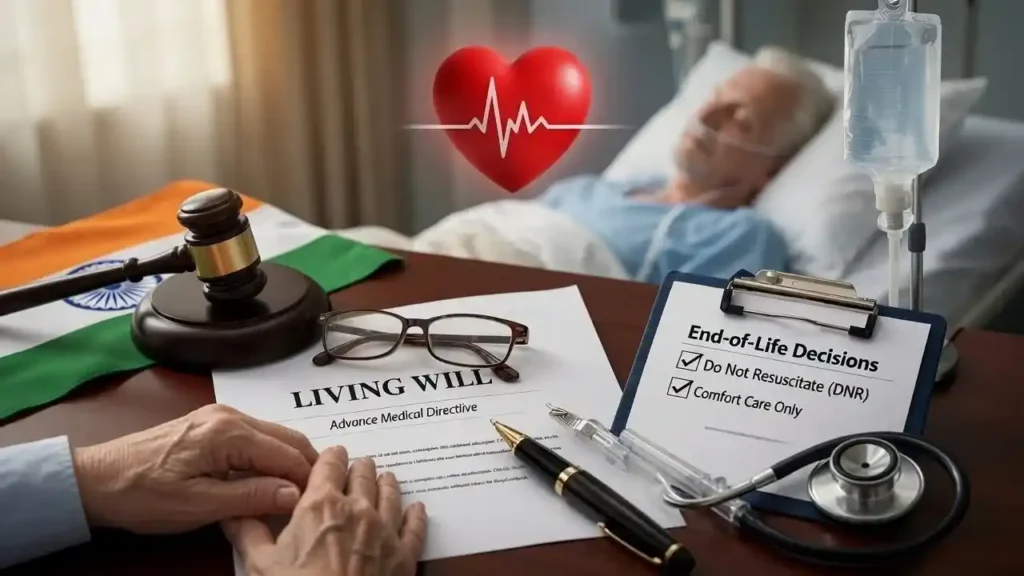
Maharashtra passive euthanasia rules The Maharashtra government has issued a comprehensive directive establishing a strict legal framework for setting up primary and secondary medical boards across all private hospitals to oversee cases of passive euthanasia and “living wills.” Issued via a Government Resolution (GR) by the state public health department, the mandate outlines the exact clinical protocol required to process endoflife decisions and withdraw lifesustaining treatment for terminally ill patients. The administrative framework extends a mechanism that had previously been implemented exclusively inside governmentrun institutions, ensuring uniform compliance across the private healthcare sector.
Maharashtra passive euthanasia – rules Apex Court Verdict in the Harish Rana Case Catalyzes Policy Shift
This major administrative directive follows the Supreme Court’s landmark March 11, 2026, judgment in the case of Harish Rana, a 32-year-old engineering student who had survived in a permanent vegetative state for over 13 years following a tragic balcony fall in 2013. The apex court permitted the withdrawal of artificial hydration, nutrition, and life support systems under medical supervision, making Rana the first individual in India legally granted passive euthanasia under the historic guidelines. The top court reiterated that any decision to cease critical life support in accordance with an advance medical directive must be systematically evaluated and sanctioned by authorized medical panels to protect patient rights and secure a dignified passing.
Maharashtra passive euthanasia rules – Composition of Primary and Secondary Boards Inside Medical Facilities
According to the government resolution, evaluating an end-of-life request requires independent approvals from two distinct medical panels. The primary medical board will be initiated by the specific private hospital’s executive head or medical director, and will feature the hospital administrator as chairperson, alongside the treating medical expert, a critical care specialist, and a senior physician or surgeon. If the primary board verifies that the illness is terminal and irreversible, the case moves to a secondary medical board. This secondary panel will be organized under the district civil surgeon, or under the medical superintendent of the state-run JJ Hospital for facilities operating within Mumbai, incorporating independent external specialists with more than five years of clinical experience.
Maharashtra passive euthanasia rules – Expanding the Scope of Advance Medical Directives Safely
Passive euthanasia is legally defined as the intentional act of allowing a natural death to occur by withholding or withdrawing medical procedures necessary to artificially sustain life. Under the newly streamlined rules, citizens can leverage a legal “living will”—an advance directive drafted when an individual is of sound mind—to state their refusal of artificial life support should they enter an unrecoverable vegetative state. By enforcing this double-board review system across private setups, the state government aims to provide transparency, eliminate legal liabilities for practicing physicians, and safeguard vulnerable families from prolonged financial and emotional distress while respecting the sovereign right to die with dignity.
👉 Also Read:
Skyroot Vikram1 orbital launch India Enters Elite Global Club as Private Rocket Vikram1 Conquers Low Earth Orbit