

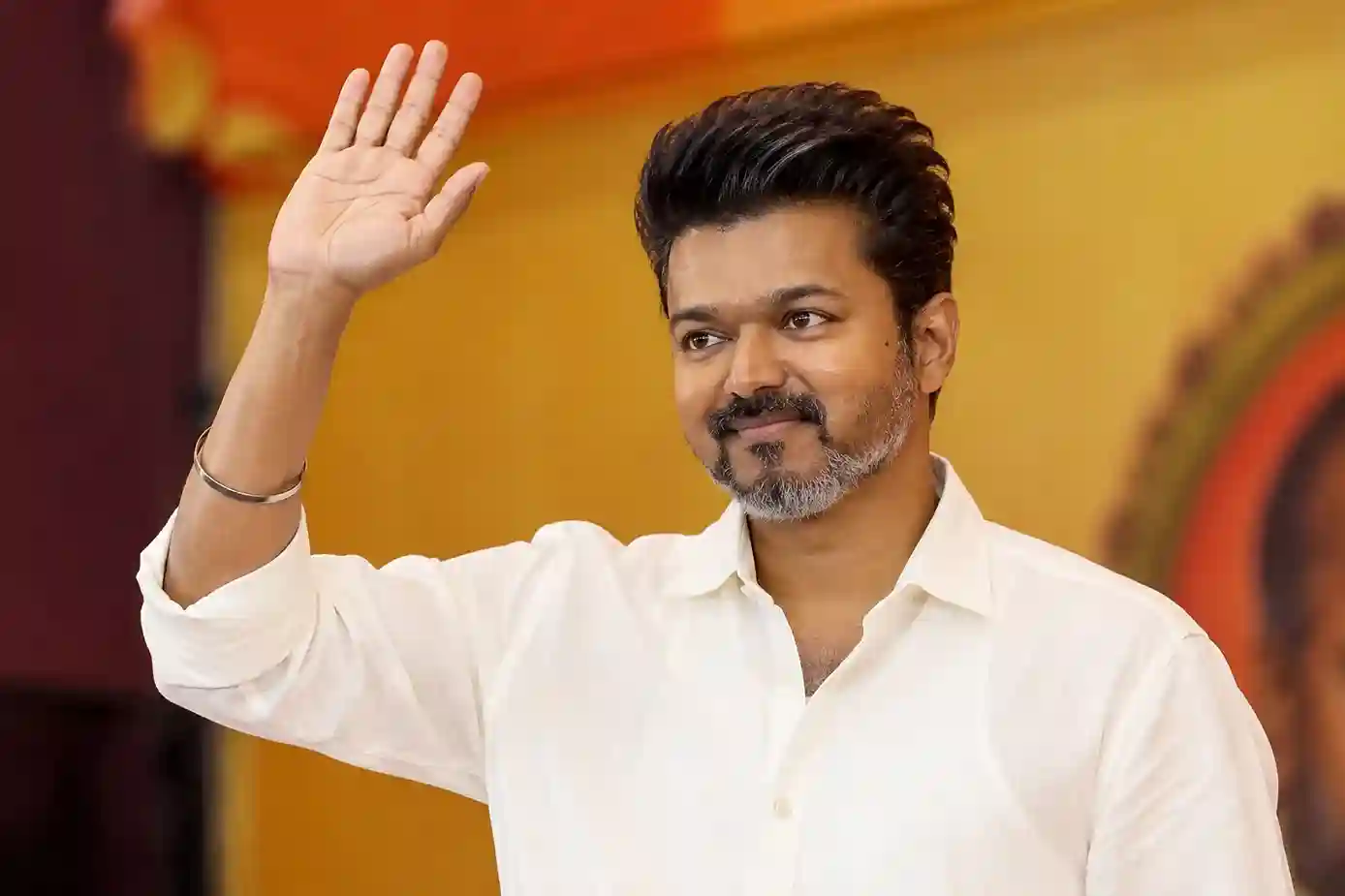
CM Thalapathy Joseph Vijay – Following a historic, paradigm-shifting triumph in the 2026 Tamil Nadu Legislative Assembly elections, actor-turned-politician C. Joseph Vijay has quickly broken the long-standing political duopoly of the DMK and AIADMK. Assuming office as the state’s ninth Chief Minister on May 10, 2026, the Tamilaga Vettri Kazhagam (TVK) leader faced massive opposition skepticism regarding his executive experience. Critics argued that transitioning from a celebrated silver-screen star to managing a massive state machinery would trigger immediate gridlock. However, his initial series of calculated executive directives has effectively neutralized these doubts, transforming the public administrative landscape through swift, ground-level policy modifications designed to optimize state machinery from day one.
CM Thalapathy Joseph Vijay – Bureaucratic Overhaul: Implementing Punctuality Controls and Direct Welfare Upgrades
To urgently dismantle deep-rooted administrative inertia, Chief Minister Vijay instituted a mandatory, state-wide daily accountability schedule for public sector employees. All state departments and municipal institutions must now operate strictly under uniform 10:00 AM to 6:00 PM operating hours, with the Chief Minister personally enforcing compliance through early arrivals at the State Secretariat at Fort St. George. Beyond administrative attendance, the TVK administration prioritized long-term economic relief by successfully sanctioning a campaign-promised 200 units of free domestic electricity, a direct benefit covering approximately 2.4 crore households across Tamil Nadu. Concurrently, to optimize the daily commute of millions, the state’s transport corporations began a multi-phased replacement of deteriorating suburban transit infrastructure, fast-tracking the deployment of modernized AC buses on heavily traveled public transit routes.
CM Thalapathy Joseph Vijay – Restoring Public Safety: Shuttering Over 700 Liquor Outlets Near Cultural Hubs
Demonstrating direct executive power, the newly formed coalition cabinet took aim at the state-run Tamil Nadu State Marketing Corporation (Tasmac). Within 48 hours of securing administrative power, the government ordered the immediate closure of 717 retail liquor outlets positioned near sensitive urban zones. The legislative mandate officially prohibits the operation of any state-licensed liquor shop within a 500-meter radius of registered religious structures, educational campuses, and mass transit terminals. This targeted sweep led to the removal of 276 liquor joints operating in the vicinity of temples, mosques, and churches, alongside 186 outlets near schools and colleges. This aggressive regulatory intervention directly addressed key campaign promises focused on re-establishing civic decorum, reducing localized street crime, and significantly improving the daily safety of women and young students in public domains.
CM Thalapathy Joseph Vijay – Safeguarding Heritage and Women’s Security: Protecting Temple Wealth and Deploying Task Forces
On cultural and social preservation, the TVK government introduced a strict policy firewall around the finances of the Hindu Religious and Charitable Endowments (HR&CE) department. The newly drafted rule guarantees that Hindu temple revenues and surplus public donations are used exclusively for architectural conservation, historical restoration, traditional ritual continuity, and the direct welfare of spiritual personnel, legally blocking any non-religious budgetary diversions. Alongside this cultural preservation framework, the administration rolled out specialized, well-funded security networks to counter systemic safety vulnerabilities. Chief among these is the rapid deployment of a state-wide Anti-Drug Task Force designed to disrupt narcotrafficking networks, alongside the creation of the ‘Singappen’ (Lioness) Special Task Force—an elite, rapid-response all-female policing wing optimized to fast-track investigations, protect vulnerable communities, and build an uncompromised safety shield for women and children.
