

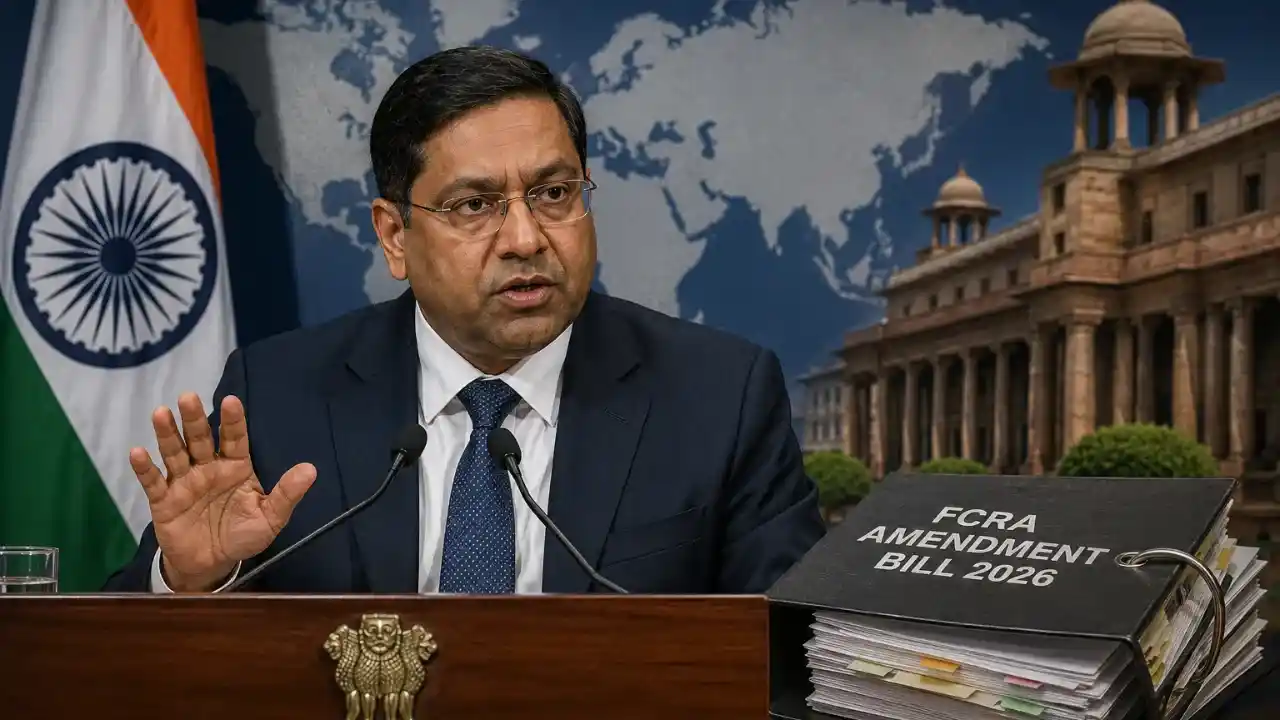
MEA Randhir Jaiswal FCRA Bill – The Ministry of External Affairs (MEA) firmly rejected comments made by a US lawmaker regarding the proposed Foreign Contribution (Regulation) Amendment Bill, 2026. Addressing a media briefing in New Delhi, MEA Official Spokesperson Randhir Jaiswal stated that framing domestic legislation is an internal matter under the exclusive jurisdiction of India’s Parliament, adding that several global democracies, including the United States, enforce regulations governing foreign funding inflows.
MEA Randhir Jaiswal FCRA Bill – Rebuttal to Claims of Religious Targeting and Bilateral Friction
Paragraph 1- The official response follows social media posts and public remarks by US Congressman Riley Moore, a Republican representative from West Virginia. Moore alleged that the proposed amendments could allow state oversight over churches and religious charities, labeling the draft legislation a “clear attack against Christians” and cautioning that it could affect broader India-US bilateral relations.
MEA Randhir Jaiswal FCRA Bill – Scope and Asset Management Framework of Proposed Amendments
The Foreign Contribution (Regulation) Amendment Bill, 2026, seeks to establish a “Designated Authority” tasked with managing assets acquired through foreign remittances whenever an organization’s FCRA registration is cancelled, surrendered, or lapses. The government emphasized that the proposed provisions explicitly mandate that where affected assets involve places of worship, their religious character must be strictly preserved while ensuring legal transparency and accountability.
MEA Randhir Jaiswal FCRA Bill – Govt Assurances and Bipartisan Reassurance to Stakeholders
Responding to concerns raised by religious institutions and civil society groups, Union Home Minister Amit Shah clarified during stakeholder meetings that the proposed law is religion-neutral, non-retrospective, and aimed strictly at preventing illegal financial flows. MEA officials reiterated that domestic statutory frameworks should be viewed within India’s constitutional process rather than through external political commentary.
