


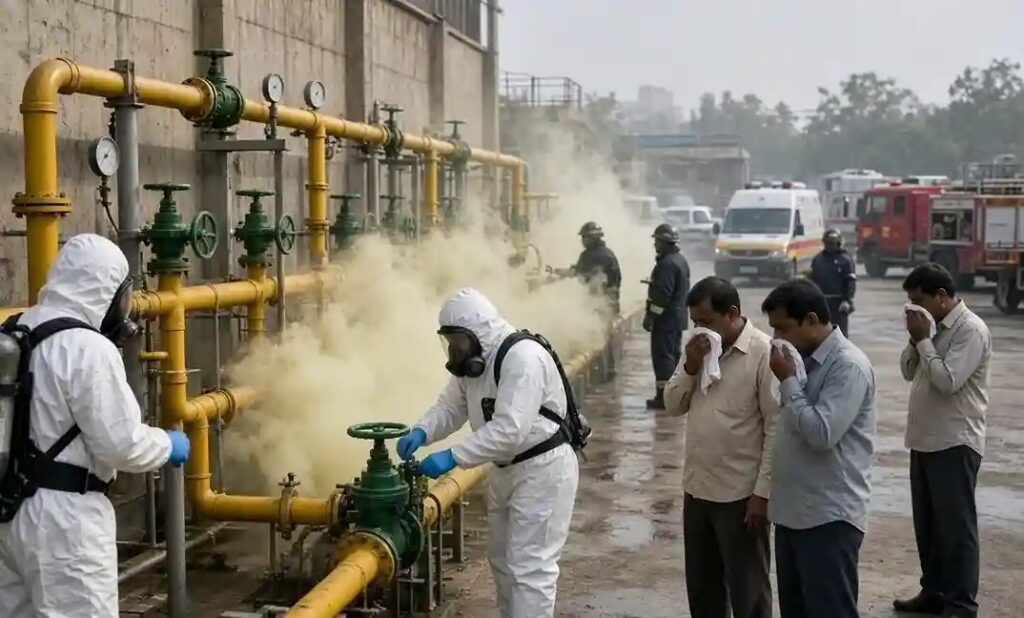
A sudden chlorine gas leak at a municipal water filtration plant in Madhya Pradesh’s Sehore district caused widespread panic, leading to the hospitalization of at least 10 local residents due to severe respiratory distress. Emergency response teams and municipal engineers rushed to the facility to plug the leaking cylinder and safely disperse the toxic fumes, preventing a major public health disaster in the surrounding residential neighborhoods.
Sehore Chlorine Gas Leak – Faulty Cylinder Valve Triggers Chemical Release and Evacuation Panic
The incident occurred during routine operational maintenance when a high-pressure commercial chlorine cylinder experienced a major valve failure, releasing concentrated toxic fumes into the immediate atmosphere. Nearby residents quickly complained of severe burning sensations in their eyes, intense throat irritation, and acute breathing difficulties. Local police and municipal workers immediately cordoned off the area, advising residents in downwind zones to cover their faces with wet cloths and evacuate their homes.
Sehore Chlorine Gas Leak – Emergency Teams Neutralize Gas as Victims Receive Medical Treatment
Specialized fire and chemical safety teams equipped with personal protective gear neutralized the leaking cylinder by submerging it in a specialized lime-and-water chemical pit. Meanwhile, ten individuals exhibiting symptoms of gas inhalation were rushed to the Sehore District Hospital for emergency oxygen support and observation. Medical officials confirmed that all hospitalized individuals are currently in stable condition and out of critical danger.
Sehore Chlorine Gas Leak – District Administration Orders Safety Audit of All Water Works
Following the neutralization of the leak, district administrative officials visited the site and ordered a comprehensive technical inquiry into the maintenance protocols at the filtration plant. Authorities directed all municipal bodies across the district to immediately conduct structural and equipment audits on chlorine storage units and chemical handling facilities to prevent similar safety breaches in public infrastructure.