

Wire Centre︱Mumbai
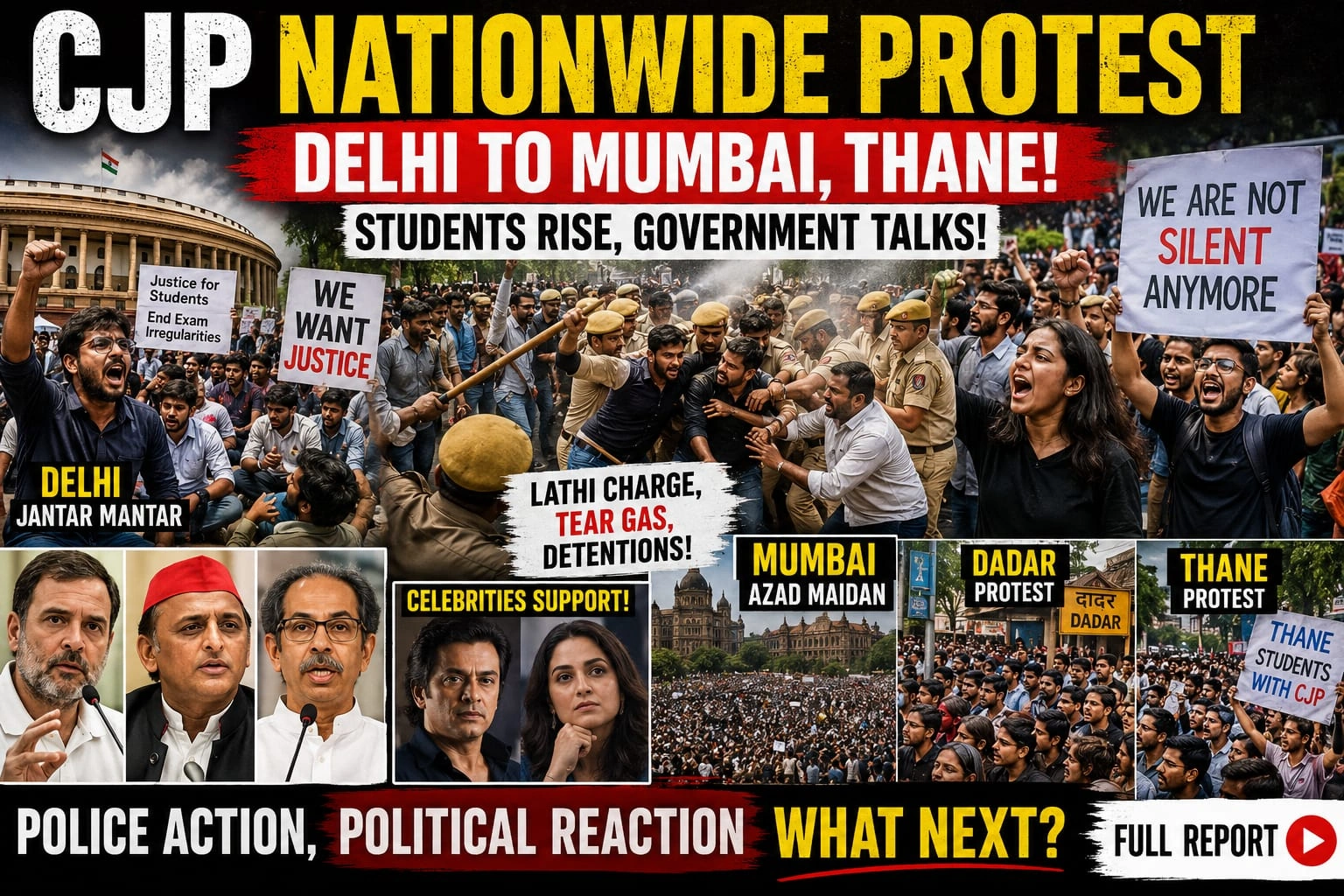
Monday marked one of the most consequential days yet in India’s student-led agitation, as the Cockroach Janta Party’s (CJP) “Sansad Chalo” march brought thousands of protesters to the heart of Delhi on the opening day of the Monsoon Session of Parliament. What began as a call for accountability over alleged examination irregularities and support for activist Sonam Wangchuk quickly escalated into direct confrontation with security forces, as Delhi Police used barricades, batons and tear gas to stop marchers from reaching Parliament Street. Over 70 people were detained across the city, while several students and CJP members said they were placed under house arrest before the protest even began — a move opposition leaders have called a deliberate attempt to blunt the movement’s momentum. The unrest wasn’t confined to the capital: solidarity demonstrations spread to Mumbai’s Azad Maidan, Dadar and Thane, alongside rallies in Varanasi, Guwahati and Panaji, turning a single-city protest into a nationwide flashpoint. Yet amid the chaos, the day also produced an unexpected shift — the Central Government, for the first time, opened formal talks with CJP representatives, even as Wangchuk continued his hospital-bed fast and opposition leaders lined up to condemn the police response.
CJP Protest Police Crackdown in Delhi Leaves Over 70 Detained.
As protesters pushed toward Parliament Street and Patel Chowk, Delhi Police moved to block the march using barricades, batons and tear gas, resulting in more than 70 detentions from Mandi House, Patel Chowk, Janpath, Jantar Mantar and Parliament Street. Several students and CJP functionaries also reported being confined to their homes ahead of the march, preventing them from joining altogether — a tactic opposition figures say was used to suppress turnout. Police denied allegations of excessive force, insisting officers acted only after repeated warnings to keep protesters out of high-security zones, and called the operation “professionally handled.”
Government Breaks Silence, Invites CJP for Talks.
In the day’s most significant development, the Centre reached out to CJP representatives for direct dialogue — the first such outreach since the movement began. Union Minister JP Nadda confirmed the talks were underway, and CJP leaders later said their concerns had been heard seriously, urging supporters to stay peaceful while the government considers next steps. Solicitor General Tushar Mehta also addressed the Delhi High Court, clarifying that video-recording at Jantar Mantar was for law-and-order purposes rather than surveillance.
Mumbai Joins In Solidarity as Wangchuk’s Fast Continues.
Support for the movement spilled into Mumbai, with demonstrations at Azad Maidan, Dadar and Thane, even as fresh prohibitory orders barring gatherings of five or more people take effect across the city from July 23 to August 6. Meanwhile, Sonam Wangchuk continued his fast from Safdarjung Hospital, vowing to keep going until student leaders are allowed to meet MPs, while his wife Gitanjali Angmo led a sit-in at Jantar Mantar. Opposition leaders including Rahul Gandhi, Uddhav Thackeray, Aaditya Thackeray and Mamata Banerjee sharply criticised the police response, framing it as an attack on democratic dissent.
