


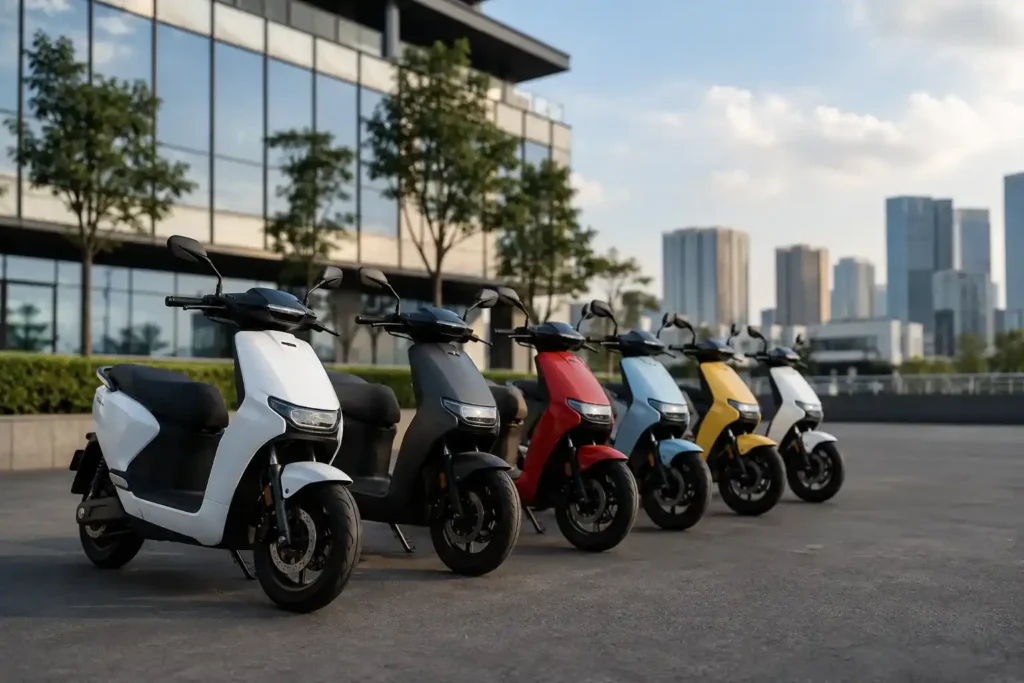
Electric Two Wheeler Sales – India’s electric two-wheeler segment has achieved a major milestone, with sales crossing the half-million mark in the first quarter of FY27. This represents the strongest quarter ever for the industry, highlighting rapid adoption of electric mobility across both urban and semi-urban markets. The exponential rise in registrations signals a structural shift in how Indian commuters view personal mobility, firmly establishing electric vehicles (EVs) as a mainstream choice rather than a niche alternative.
Electric Two Wheeler Sales – Quarterly Sales Cross Historic Half-Million Registrations Following Policy Push
According to the latest retail registration data compiled from the government’s VAHAN portal and industry tracking bodies, over 5 lakh electric two-wheelers were sold between April and June 2026. This monumental surge reflects growing consumer interest, improving charging infrastructure, and supportive government frameworks. Analysts point out that the implementation of evolved Electric Mobility Promotion schemes alongside state-level incentives has provided a predictable environment for manufacturers to scale up production.
Furthermore, the expansion of localized battery manufacturing and localized supply chains has allowed brands to offer highly competitive pricing structures, nearly bridging the upfront cost gap between traditional Internal Combustion Engine (ICE) vehicles and electric alternatives. This volume-heavy quarter sets an aggressive benchmark for the rest of the fiscal year, proving that the consumer transition toward clean energy is rapidly accelerating.
Electric Two Wheeler Sales – Major Market Leaders Drive Unprecedented Volume Despite Supply Pressures
Major players like Ola Electric, TVS Motor Company, Bajaj Auto, and Hero MotoCorp contributed significantly to this growth, driving massive volume through aggressive retail expansions and newly launched variants. The record sales demonstrate the sector’s overall resilience despite systemic challenges like high battery raw material costs, supply chain bottlenecks, and persistent consumer range anxiety. Market leaders have systematically countered these hurdles by establishing wider public fast-charging networks across Tier-1 and Tier-2 cities.
The introduction of mid-range, highly affordable models catering specifically to daily office commuters and delivery fleets has also catalyzed bulk commercial orders. Industry experts believe this competitive momentum will continue to intensify as newer, more affordable models with improved battery chemistry and software integration enter the domestic market over the next two quarters.
Electric Two Wheeler Sales – Rising Fuel Prices and Urbanization Fuel Sustained Double-Digit Growth Projections
The strong performance in Q1 sets a highly positive tone for the rest of the financial year, giving manufacturers the confidence to ramp up capital expenditure and capacity expansions. Industry leaders expect sustained double-digit growth to continue into the upcoming festive season, traditionally the highest selling period for two-wheelers in India. This secular growth curve is being fundamentally driven by rising fossil fuel prices, rapid urbanization, and a massive surge in environmental awareness among younger demographics.
Additionally, the quick-commerce and last-mile delivery sectors have aggressively mandated the transition of their fleets to 100% electric, creating a massive, predictable B2B demand funnel that ensures consistent monthly registration volumes for manufacturers nationwide.
Electric Two Wheeler Sales – Strategic Long-Term Outlook for India’s Evolving Clean Mobility Ecosystem
This milestone marks a definitive turning point for India’s clean energy transition, proving that the two-wheeler ecosystem is the primary engine driving mass EV adoption in the country. Moving forward, the focus is expected to shift toward standardized battery swapping networks and recycling infrastructure to manage the lifecycle of aging battery packs.
As the country moves closer to its long-term net-zero goals, the lessons learned from this record-breaking quarter will likely inform broader policy frameworks for electric three-wheelers, passenger cars, and commercial public transit systems, cementing India’s position as a global hub for electric two-wheeler manufacturing.
👉 Also Read:
Mumbai Furniture Upcycling From Heirlooms to Personalized Pieces Furniture Upcycling Gains Momentum in Mumbai