


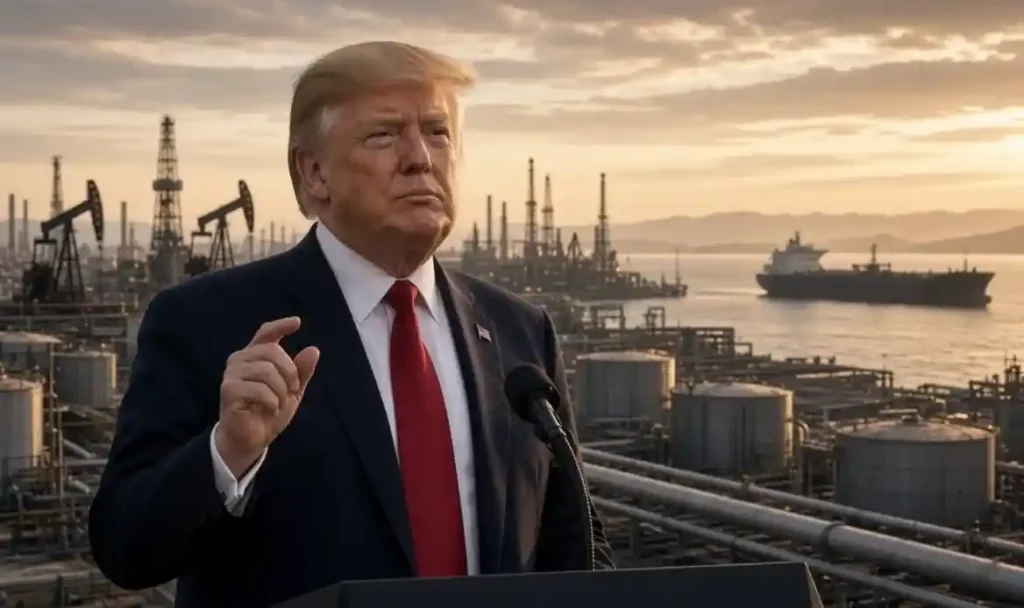
US Venezuela Oil Deal – US President Donald Trump has announced a historic energy agreement between the United States and Venezuela, describing it as the largest oil pact in world history. The landmark agreement seeks to unlock and commercialize an estimated 65 billion barrels of heavy crude reserves located in Venezuela’s Orinoco Petroleum Belt. The announcement marks a major shift in diplomatic and trade relations between Washington and Caracas, paving the way for massive foreign investment and joint exploration initiatives.
US Venezuela Oil Deal – Multi-Billion-Dollar Infrastructure Investments to Modernize Refineries
Under the terms of the agreement, major American energy corporations will collaborate with Venezuela’s state-owned oil firm, PDVSA, to modernize outdated extraction and refining infrastructure. The deal outlines long-term investments designed to repair dilapidated drilling rigs, update processing terminals, and upgrade transport pipelines. US energy experts note that upgrading Venezuela’s heavy crude processing facilities is critical to restoring production to pre-sanction output capacities.
US Venezuela Oil Deal – Strategic Energy Shift Aimed at Stabilizing Global Oil Prices
Speaking at the announcement, President Trump emphasized that tapping into Venezuela’s vast energy reserves will enhance global energy security and reduce reliance on Middle Eastern suppliers. Administration officials project that integrating Venezuelan heavy crude into US Gulf Coast refineries which are specifically configured to process heavy grade oil will significantly increase global market liquidity, helping drive down fuel and energy prices for domestic consumers.
US Venezuela Oil Deal – Geopolitical Implications and Economic Outlook for Venezuela
The deal is expected to deliver substantial financial relief to Venezuela’s struggling economy by reopening direct access to Western capital markets and international distribution channels. However, international analysts emphasize that full operational execution will require navigating complex regulatory frameworks, environmental standards, and political transitions within the region. Despite logistical hurdles, both nations framed the pact as a transformative step toward economic stabilization and strategic energy partnership.