

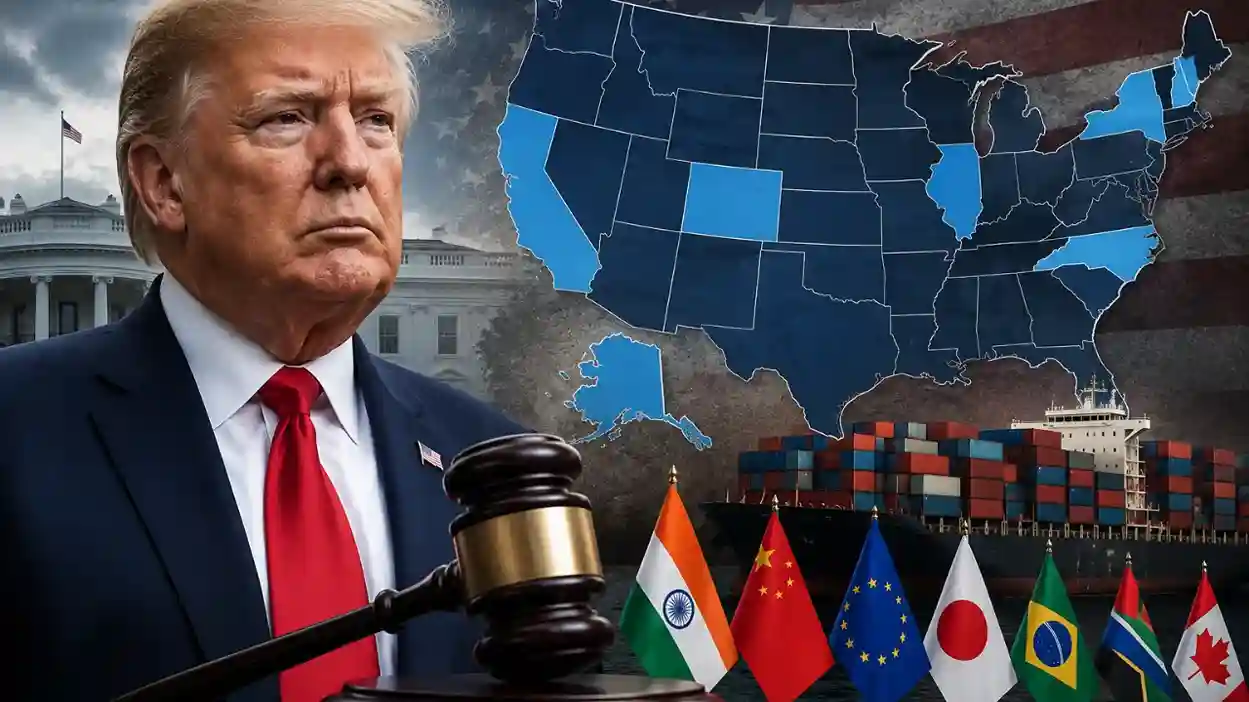
US Tariffs – A coalition consisting of 25 U.S. states has formally filed a lawsuit in the U.S. Court of International Trade challenging the Donald Trump administration’s latest round of broad tariffs. Targeting roughly 60 trading partners including India, the European Union, and several major global economies—the newly implemented duties range from 10% to 12.5%. The state governments argue that the administration is unlawfully attempting to bypass earlier federal setbacks by using forced-labor compliance as a justification to impose sweeping import taxes that drive up expenses for domestic businesses and households.
US Tariffs – Legal Arguments and Allegations of Executive Overreach
The legal challenge contends that the administration’s reliance on Section 301 of the Trade Act of 1974 is an improper mechanism for enacting universal trade levies. State leaders assert that Section 301 was historically designed to address specific, targeted unfair trade practices rather than sweeping across nearly 99% of American imports. Furthermore, the complaint claims that the forced-labor rationale is merely a pretext to revive previous global levies that were struck down by the U.S. Supreme Court and lower trade courts earlier in the year.
US Tariffs – Impact on Global Trade Partners and India’s Tariff Adjustments
The contested trade measures affect numerous global exporters, with adjustments made depending on individual national compliance measures regarding forced-labor import bans. For instance, India faced an initial proposed rate of 12.5% before seeing its tariff adjusted downward to 10% following policy amendments regarding foreign trade. While the White House maintains that these duties are legally grounded to pressure international partners against exploitative labor conditions, trading partners and domestic critics continue to scrutinize the shifting legal framework.
US Tariffs – Economic Fallout and Demands for Judicial Relief
The plaintiff states led by prominent regional attorneys general and governors have urged the international trade court to declare the tariffs illegal and block their enforcement, alongside securing refunds for duties already collected. State officials emphasize that the added financial burdens threaten supply chains, escalate consumer prices for everyday household goods, and disrupt steady international commerce. As the legal battle unfolds, it sets the stage for another major showdown between state authorities and executive trade powers.
