


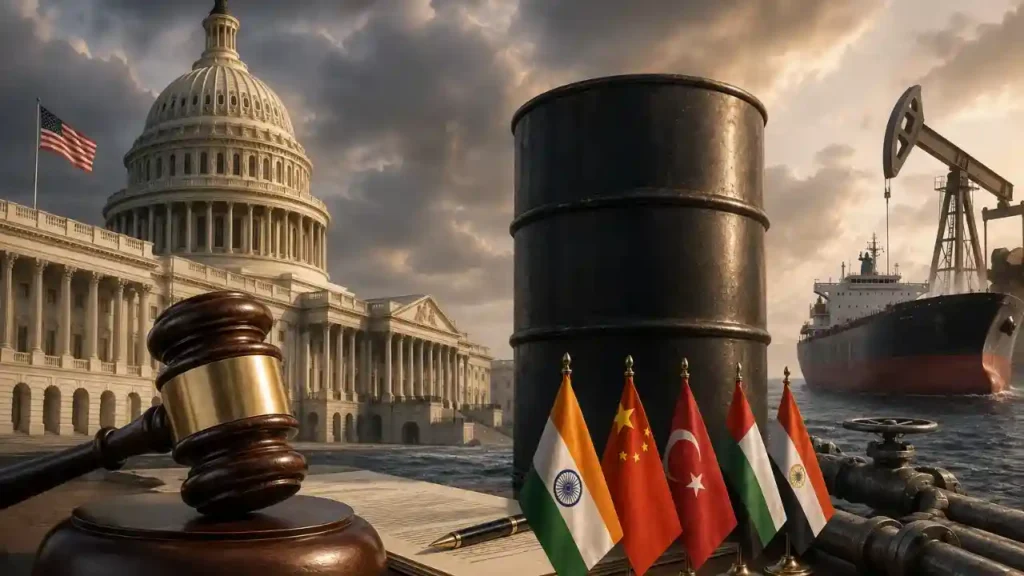
US Senate Russia Sanctions Bill – In a decisive bipartisan move aimed at choking Moscow’s energy revenue, the US Senate voted 86–11 to approve sweeping legislation that empowers President Donald Trump to impose tariffs of up to 100 per cent on goods from five major buyers of Russian oil and natural gas, including India and China. Renamed the Lindsey O. Graham Sanctioning Russia and Iran Act of 2026 to honor its co-author following his sudden passing in July, the bill now advances to the House of Representatives, which is scheduled to reconvene on August 31.
US Senate Russia Sanctions Bill – Five Nations Targeted and Discretionary Authority Granted
Under the provisions of the bill, the US Trade Representative will monitor and identify the top five purchasers of Russian crude oil or natural gas every 180 days. The current list targets China, India, Slovakia, Hungary, and Azerbaijan. Rather than applying tariffs automatically, the legislation grants executive authority to the US President to decide the exact timing and scope of additional levies up to 100 per cent on exports from these nations entering American markets.
US Senate Russia Sanctions Bill – Strategic Objectives and Legacy Behind the Bipartisan Support Championed by late Republican Senator Lindsey Graham and Democratic Senator Richard Blumenthal, the bill seeks to force major global economies into choosing between maintaining trade relations with the US or purchasing discounted Russian energy. Beyond energy-related tariffs, the measure introduces direct sanctions against Russian political figures, financial institutions, and Kremlin-linked oligarchs, while extending the Iran Sanctions Act of 1996 through 2031 to curb energy investments in Tehran.
US Senate Russia Sanctions Bill – Implications for Indian Exports and Next Legislative Steps
The potential tariff surge poses a significant challenge for Indian exporters, who are already dealing with elevated tariffs imposed during previous trade disputes over Russian oil sourcing. While the Indian government has maintained that its crude procurement decisions are guided strictly by domestic energy security and market pricing, economic observers warn that a 100 per cent tariff would disrupt major export sectors. The bill requires formal approval from the House of Representatives and the President’s signature before becoming federal law.