


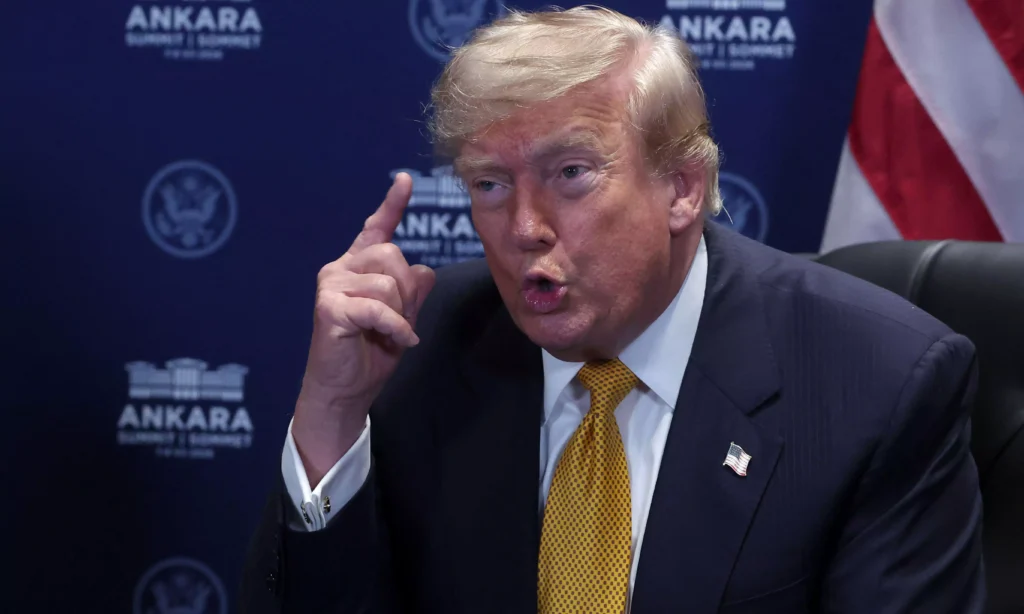
he fragile diplomatic understanding between the United States and Iran has suffered another major setback after former U.S. President Donald Trump declared that the ceasefire arrangement with Tehran was “over.” His remarks came as the U.S. military launched fresh strikes against Iranian targets following attacks on commercial vessels near the Strait of Hormuz. The renewed confrontation has heightened geopolitical tensions, triggered concerns over global oil supplies, and prompted international calls for restraint.
Trump Says Ceasefire Has Collapsed Amid Renewed Military Action
Speaking during the NATO Summit in Ankara, Donald Trump stated that the existing understanding with Iran had effectively ended, although he indicated that diplomatic engagement could still continue if conditions allowed. The statement followed U.S. military operations targeting Iranian air defense systems, coastal surveillance facilities, missile launch sites, and naval assets after Washington accused Tehran of attacking commercial shipping in the Strait of Hormuz. Iran has strongly criticized the strikes and warned that it would take necessary measures to protect its national interests.
Growing Concerns Over Regional Security and Global Energy Markets
The latest escalation has renewed fears of wider instability across the Middle East. Shipping activity through the Strait of Hormuz, one of the world’s most important energy corridors, remains under close watch as security concerns increase. International maritime organizations have warned about disruptions to commercial navigation, while global crude oil prices climbed sharply amid fears of prolonged conflict and potential supply interruptions. Several governments and international organizations have urged both sides to avoid further escalation and return to diplomatic negotiations.
International Community Calls for De-escalation
Global leaders continue to monitor the rapidly evolving situation, emphasizing the importance of preventing a broader regional conflict. Diplomatic efforts remain focused on reducing tensions and protecting international shipping routes. Analysts warn that any prolonged confrontation between Washington and Tehran could have significant consequences for global trade, energy markets, and geopolitical stability. While negotiations have not been ruled out entirely, the latest military exchanges have made the path toward a lasting agreement increasingly uncertain.