

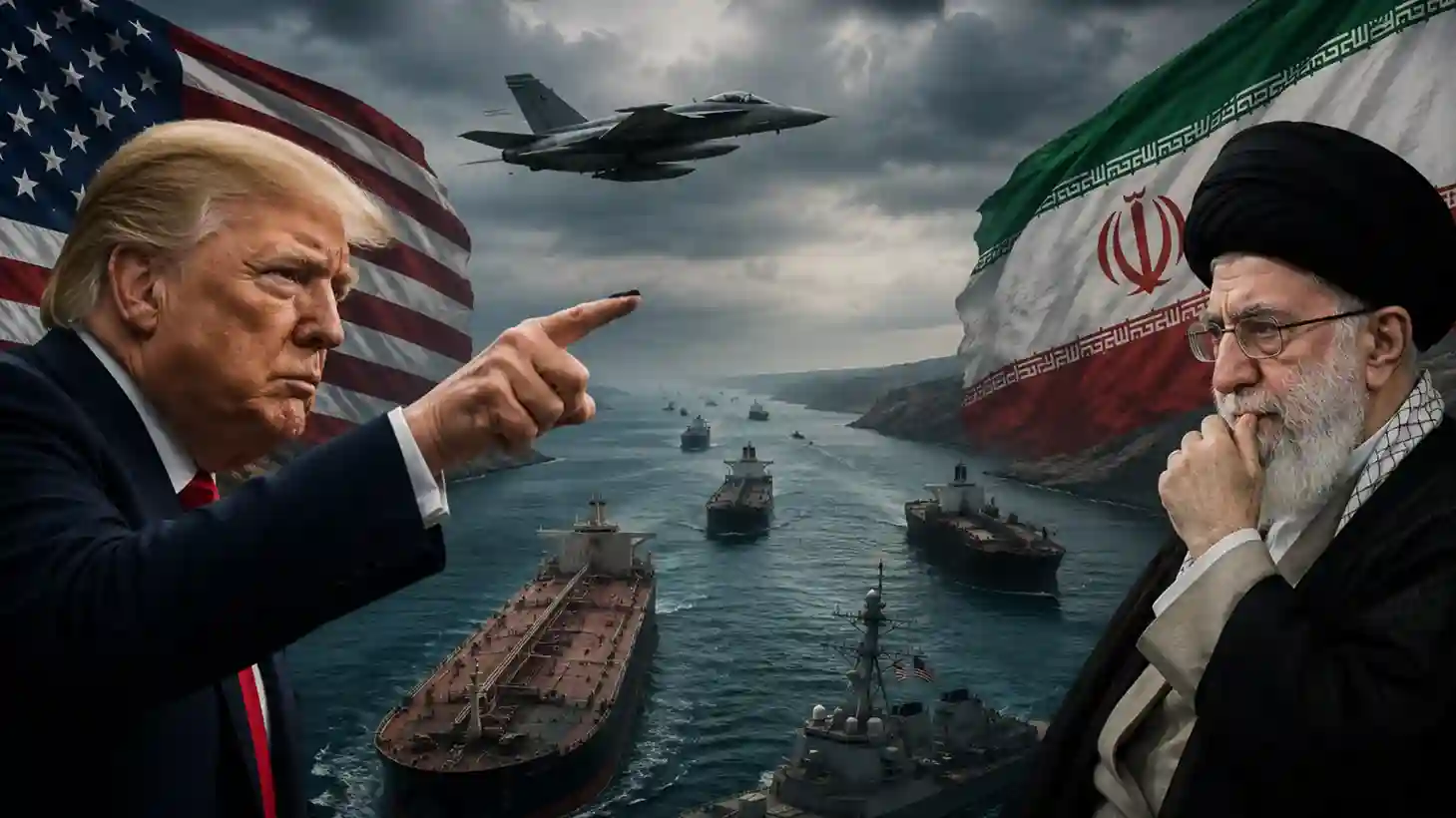
Strait of Hormuz The United States has issued an explicit ultimatum to the Iranian government, demanding a public declaration that the Strait of Hormuz will remain entirely unobstructed for global shipping. This diplomatic flashpoint follows recent military friction in the critical choke point, where Washington accuses Iranian forces of opening fire on international commercial vessels. While Iranian officials reportedly categorized the maritime strikes as an unintended consequence of an internal system malfunction, the explanation has been flatly rejected by the White House. Highlevel US officials have warned that noncompliance with the demand will yield highly unfavorable outcomes for Tehran, throwing regional security into deep uncertainty.
Strait of Hormuz – Stalled MoU Negotiations and Rising Escalations in the Gulf
The sudden friction comes immediately after US President Donald Trump unilaterally declared that the existing, Pakistani-brokered Memorandum of Understanding (MoU) and its accompanying ceasefire were officially over. Despite ongoing, highly active back-channel mediation efforts led by Qatari diplomats currently in Tehran, both nations find themselves deadlocked in a high-stakes standoff. Iranian Foreign Minister Abbas Araghchi publicly criticized the United States for failing to respect the agreement, specifically pointing to recent financial sanctions levied by the US Treasury Department as a direct breach of the pact’s core terms. Araghchi emphasized that Iran would only return to compliance if Washington matched the commitment, leaving the future of diplomatic channels deeply compromised.
Strait of Hormuz – Global Shipping Reductions and the Defense Threat Matrix
The direct impact on global energy corridors has been immediate, with maritime tracking data revealing a sharp, consecutive multi-night drop in commercial transit through the Strait of Hormuz. Standard traffic has plummeted from upwards of twenty daily crossings to just six, with nearly 40% of vessels engaging in “dark transits” by switching off transponders to avoid detection. Amid these threats to the global energy supply, Iranian Parliament Speaker and chief negotiator Mohammad Bagher Ghalibaf affirmed that the country remains entirely prepared for a full-scale defense. Ghalibaf made it clear that while avoiding broader warfare remains a global priority, Iran will not succumb to coercive diplomacy or surrender its sovereign position.
Strait of Hormuz – Nuclear Constraints and Potential Military Contingencies
Compounding the maritime crisis, Washington has tied the resumption of any long-term peace framework to strict new nuclear conditions, requiring Iran to halt its atomic program and surrender control of its enriched uranium stockpiles. US intelligence and defense officials have expressed deep pessimism regarding the likelihood of securing a comprehensive nuclear deal under current conditions. White House representatives have openly stated that the Pentagon maintains active, highly efficient military options to permanently block Iranian access to buried nuclear facilities if diplomatic avenues collapse. As oil prices react to the instability, the administration faces immense domestic pressure to secure the trade route ahead of the upcoming legislative elections.
👉 Also Read:
US India Tariffs US Revives Massive 500% Tariff Threat Against India Over Russian Oil Imports
