

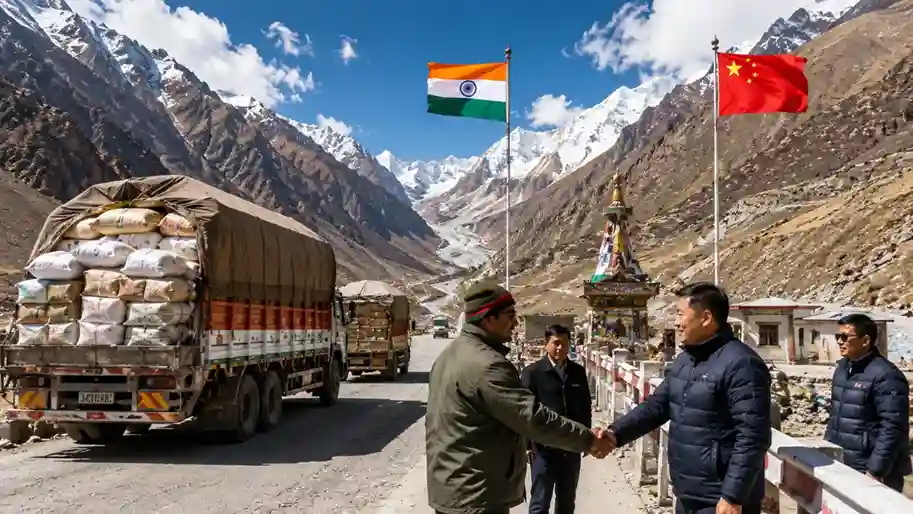
Lipulekh Pass Bilateral crossborder trade between India and China through the strategic Lipulekh Pass in Uttarakhand’s Pithoragarh district has officially resumed after a hiatus of more than six years. The historic route, which had remained shut since the onset of the COVID19 pandemic and subsequent border tensions, has welcomed its first batch of Indian traders traveling to Taklakot in Tibet. Facilitated by formal clearances from central ministries and coordinated administrative preparations by local authorities in Dharchula and Gunji, the reopening marks a significant milestone for regional commerce and brings muchneeded economic relief to local border communities.
Lipulekh Pass – Administrative Preparations and Streamlined Border Transit
To ensure the smooth execution of the renewed trade season, the district administration established comprehensive logistical support systems, including transit camps, medical facilities, and dedicated communication networks. A newly established customs office in Gunji has streamlined the issuance of trade passes for participating merchants and their assistants. Local authorities also coordinated arrangements for pack animals like mules and horses near Nabhidhang to help transport goods across the high-altitude terrain leading up to the 600-meter stretch to the Lipulekh Pass.
Lipulekh Pass – Relief for Local Traders and Recovery of Stored Goods
The resumption of the route has brought immense enthusiasm among traders in the Kumaon region, many of whom faced severe financial hardships and disruptions due to the prolonged closure. Beyond new commercial exchanges, the reopening allows merchants to access and retrieve goods that had remained locked in warehouses across Taklakot since operations were halted. With multiple batches of traders applying for permits, administrative officials are planning subsequent delegations to maximize seasonal trade opportunities before the window closes.
Lipulekh Pass – Broader Diplomatic Implications and Regional Economic Growth
The revival of the Lipulekh trading route follows high-level diplomatic engagements and formal No-Objection Certificates issued by the Ministry of External Affairs, reflecting a gradual thaw in bilateral engagement. Historically serving as a vital economic link for Himalayan communities since its initial revival in the early 1990s, the restarted trade corridor is expected to inject fresh momentum into the local economy, create jobs, and restore traditional cultural and commercial ties across the border.
👉 Also Read:
Ethanol Blending Petrol Would Have Cost Rs 125/Litre During Crude Spike Without Ethanol Blending, Says Govt
