


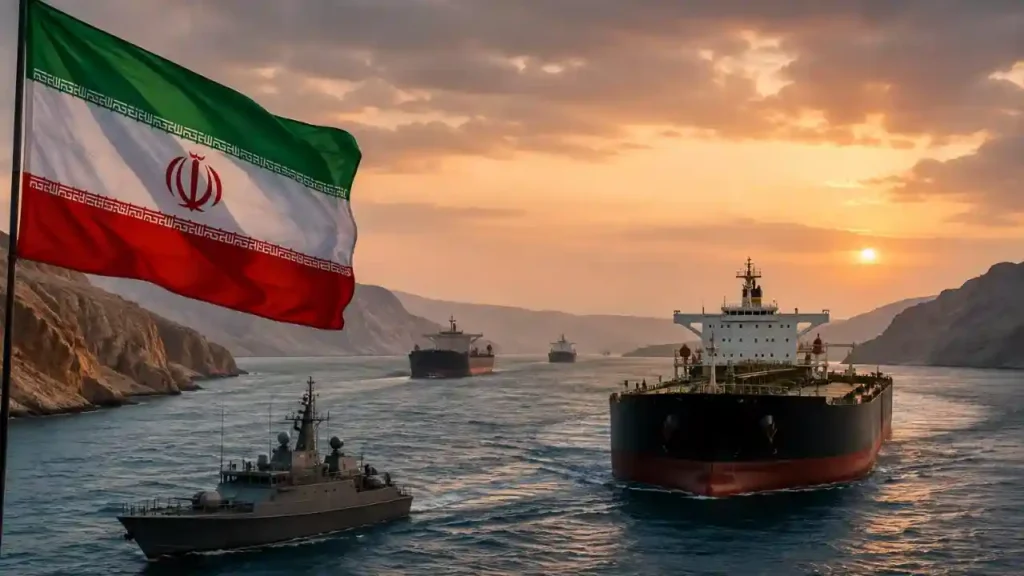
Iran Strait Of Hormuz Ban US Ships – Iran is actively working to solidify its maritime control over the Strait of Hormuz one of the world’s most critical oil transit chokepoints despite US assertions that regional hostilities may soon wind down. According to Iranian state media reports, lawmakers in Tehran have drafted new legislation proposing an explicit ban on American, Israeli, and hostile foreign vessels entering the strategic waterway, along with steep financial penalties for non-compliant commercial shipping.
Iran Strait Of Hormuz Ban US Ships – Proposed 20% Cargo Penalty and Legislative Framework
Details disclosed by Iranian parliamentary sources indicate that the proposed bill includes a penalty mechanism levying fines up to 20% of total cargo valuation on vessels attempting unauthorized transit or violating newly established navigation protocols. Lawmakers clarified that the draft is undergoing expert consultations to refine enforcement guidelines, signaling a shift toward formalized legislative control over regional maritime routes.
Iran Strait Of Hormuz Ban US Ships – Iranian-Omani Negotiations vs. US Free Navigation Demands
As part of its broader strategy, Tehran is engaged in discussions with neighboring Oman to establish a joint regulatory framework governing transit across the Strait of Hormuz and the Gulf of Oman. While Iran and Oman aim to implement environmental, security, and administrative maritime oversight, the United States continues to insist that the waterway remain an unrestricted international transit zone free from regional tolls or passage restrictions.
Iran Strait Of Hormuz Ban US Ships – Prolonged Conflict and Strategic Maritime Leverage
The legislative move comes as direct and indirect conflict between Iran and the US enters its sixth month without a formal resolution. Security analysts observe that Tehran is leveraging its geographical position along the Strait of Hormuz to establish long-term maritime bargaining power, creating new friction points for international commercial shipping and global energy supply lines.