

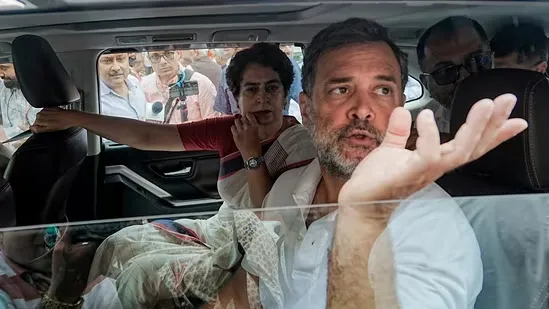
The political fallout from the “Chalo Sansad” protest gathered momentum on Tuesday as Leader of Opposition Rahul Gandhi called for the resignation of Prime Minister Narendra Modi, Education Minister Dharmendra Pradhan, and Home Minister Amit Shah. Gandhi alleged that the government had responded to peaceful student concerns with force instead of addressing issues related to the country’s education and examination system. His remarks came a day after clashes between protesters and Delhi Police near Parliament left several people injured and triggered nationwide political debate.
Rahul Gandhi Criticises Government’s Response to Student Protest
Speaking outside Parliament during the Monsoon Session, Rahul Gandhi said students were demanding accountability over the education and testing system, which he claimed had lost public confidence. He questioned the Prime Minister’s silence over the incident and described the police action as unacceptable. Later, Gandhi, accompanied by senior Congress leaders including Priyanka Gandhi Vadra and K.C. Venugopal, visited Ram Manohar Lohia Hospital to meet protesters who were injured during Monday’s clashes.
Protest Near Parliament Turns Into Major Security Challenge
The “Chalo Sansad” march witnessed thousands of demonstrators attempting to move toward Parliament despite security restrictions and prohibitory orders in parts of central Delhi. Police deployed heavy barricading and security personnel to stop the procession. As tensions escalated, authorities used measures including baton charges and tear gas to disperse the crowd, while several protesters were detained. The demonstration also caused traffic disruptions and temporary restrictions around key locations in central Delhi.
Political Debate Intensifies as Protest Continues
The confrontation has further deepened the political divide over the handling of education-related issues and public protests. Representatives of the protesting organisation later met Union Minister J.P. Nadda to submit their demands, while organisers indicated that their campaign would continue until their key demands are addressed. The developments have kept education reforms, examination transparency, and the government’s handling of demonstrations at the centre of the national political discussion.
