

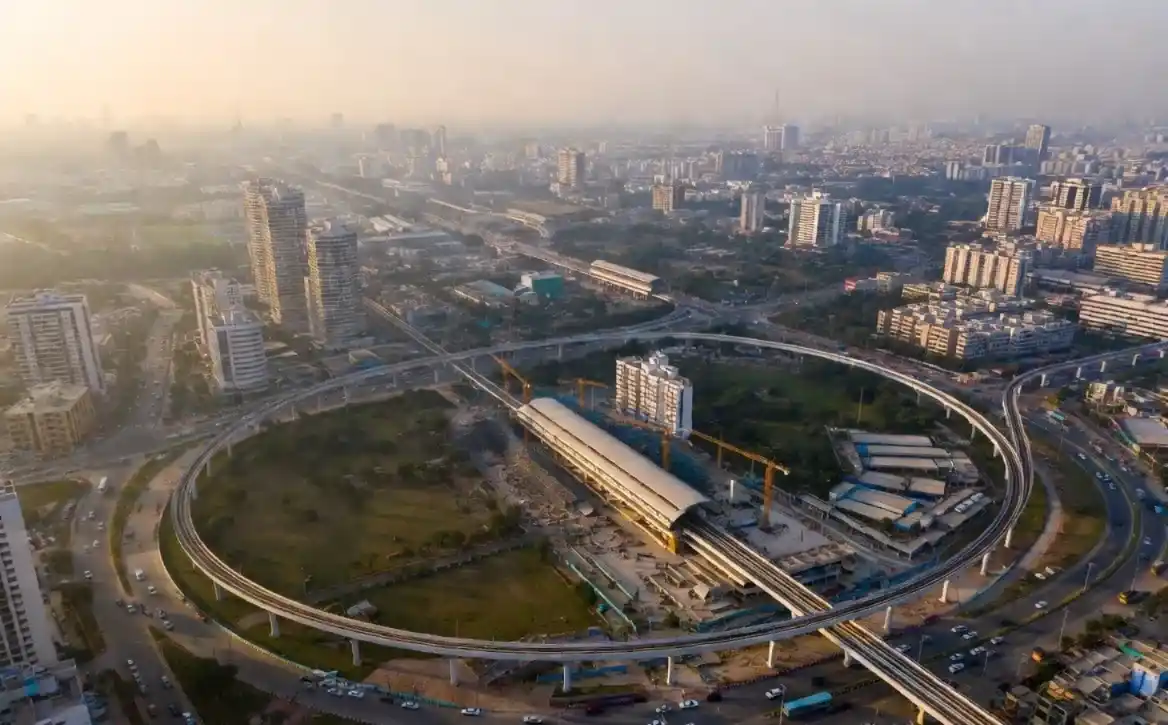
In a significant move to ease growing discontent, the Maharashtra government has promised to organise comprehensive stakeholder meetings to address public objections and concerns related to the proposed 29-km Thane Integral Ring Metro Rail project. Industries Minister Uday Samant made the announcement in the Legislative Council, stating that the Thane District Collector will convene these meetings within the next one month. The discussions will involve public representatives, Metro officials, civic authorities, and other concerned parties to clarify doubts and resolve key issues.
Thane Ring Metro – The assurance came after two MLCs — Congress leader Abhijit Wanjari and BJP’s Niranjan Davkhare — strongly questioned the project’s viability during the ongoing monsoon session. Wanjari informed the House that many residents have urged the government to rethink the project. While acknowledging Thane’s urgent need for better public transportation, he argued that the ring metro might not alleviate traffic congestion effectively and could instead create fresh urban challenges such as increased construction-related disruptions and long-term infrastructure strain. He specifically asked whether the Detailed Project Report had adequately studied the city’s complex road network, traffic flow patterns, and incorporated public feedback.
Thane Ring Metro – Davkhare raised critical points about poor integration with other mass transit systems, including MMRDA’s Metro Line 4 and the suburban railway network. He questioned whether commuters would actually prefer the longer circular route over shorter direct options. Other major concerns include potential damage to old heritage buildings in central Thane due to underground tunnelling, unresolved land demarcation issues in native settlements, and possible displacement of residents. The project has been facing sustained opposition from citizen groups, environmental activists, and local residents, particularly along Ghodbunder Road and areas near Hiranandani Estate, ever since alignment changes were proposed.
Thane Ring Metro – Responding to the criticisms, Minister Uday Samant defended the project as a well-planned, future-ready transport solution. He emphasised that detailed traffic studies and technical assessments were conducted before finalising the 29-km circular corridor with 22 stations. Samant noted that simply widening existing roads would require large-scale demolitions and cause massive displacement, making the metro a more sustainable alternative. He added that nearly 9% of the work has already commenced and the project is being closely monitored by the Prime Minister’s Office. The Union Cabinet had approved the ₹12,200-crore Thane Integral Ring Metro in August 2024, with Maha Metro as the executing agency. The project aims to become operational by 2029 and is expected to serve over 6.47 lakh passengers daily initially, scaling up significantly in the coming decades.
Thane Ring Metro – The Thane Ring Metro is designed as an internal circular line that will connect key areas within Thane city, aiming to improve intra-city mobility and reduce pressure on the existing overloaded road network. However, critics continue to highlight environmental risks, potential traffic bottlenecks during construction, and questions over financial viability. The upcoming stakeholder meetings are being seen as a crucial step to build consensus and ensure the project moves forward with broader public support.
