


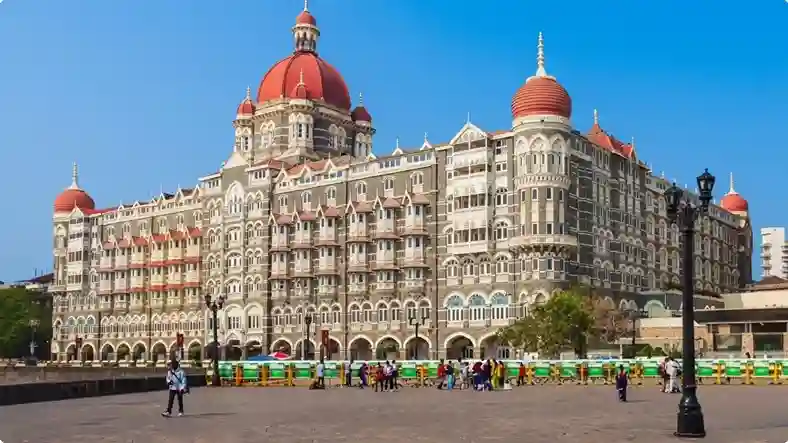
Taj Mahal Palace BMC The Brihanmumbai Municipal Corporation (BMC) has issued a massive demand notice to the iconic Taj Mahal Palace Hotel in Colaba, demanding a payment of approximately ₹27.12 crore. The steep penalty covers unauthorized road and footpath occupancy charges incurred up to March 2026. The civic body decided to retroactively cancel special concessions previously granted to the highprofile hospitality property, taking a tough regulatory stance on public space management.
Taj Mahal Palace BMC – Post-26/11 Security Measures Under Civic Scrutiny
The long-running space dispute stems from massive barricades, large security planters, and dedicated parking zones installed around the luxury property immediately following the tragic 26/11 terror attacks. In total, the hotel occupied 869.59 square meters of road space and 1,136.3 square meters of public footpath to maintain a secure perimeter. While the hotel originally secured a 50 percent concession on road charges and a full waiver on footpath dues from a BMC committee in 2021, the civic administration has officially rescinded those breaks to establish parity across the city.
Taj Mahal Palace BMC – The Breakdown of the Massive Financial Demand
According to the official notice issued by the assistant commissioner of the local A ward, the final ₹27.12 crore bill includes heavy interest levied due to repeated non-payment. The total comprises ₹4.97 crore for occupying public roads and a massive ₹22.15 crore for occupying pedestrian footpaths. The BMC systematically recalculated the dues after realizing that similar commercial establishments were being held to a stricter payment standard without administrative waivers.
Taj Mahal Palace BMC – A Uniform Policy for Mumbai’s Commercial Hubs
This aggressive recovery drive follows a successful legal push against the Bombay Stock Exchange (BSE), which recently agreed to clear ₹3.25 crore in pending road occupancy fees. Similarly, the nearby Trident Hotel complied with civic directives by paying its dues and removing its security planters from public paths. A senior BMC official confirmed that because other major corporate entities have complied with the law, there was no logical justification to continue shielding the Taj property from standard public land usage fees.
👉 Also Read:
Hydrogen Train India PM Modi Flags Off India’s First Hydrogen Powered Train in Haryana