Yusuf Rana | Mumbai
Wire Centre
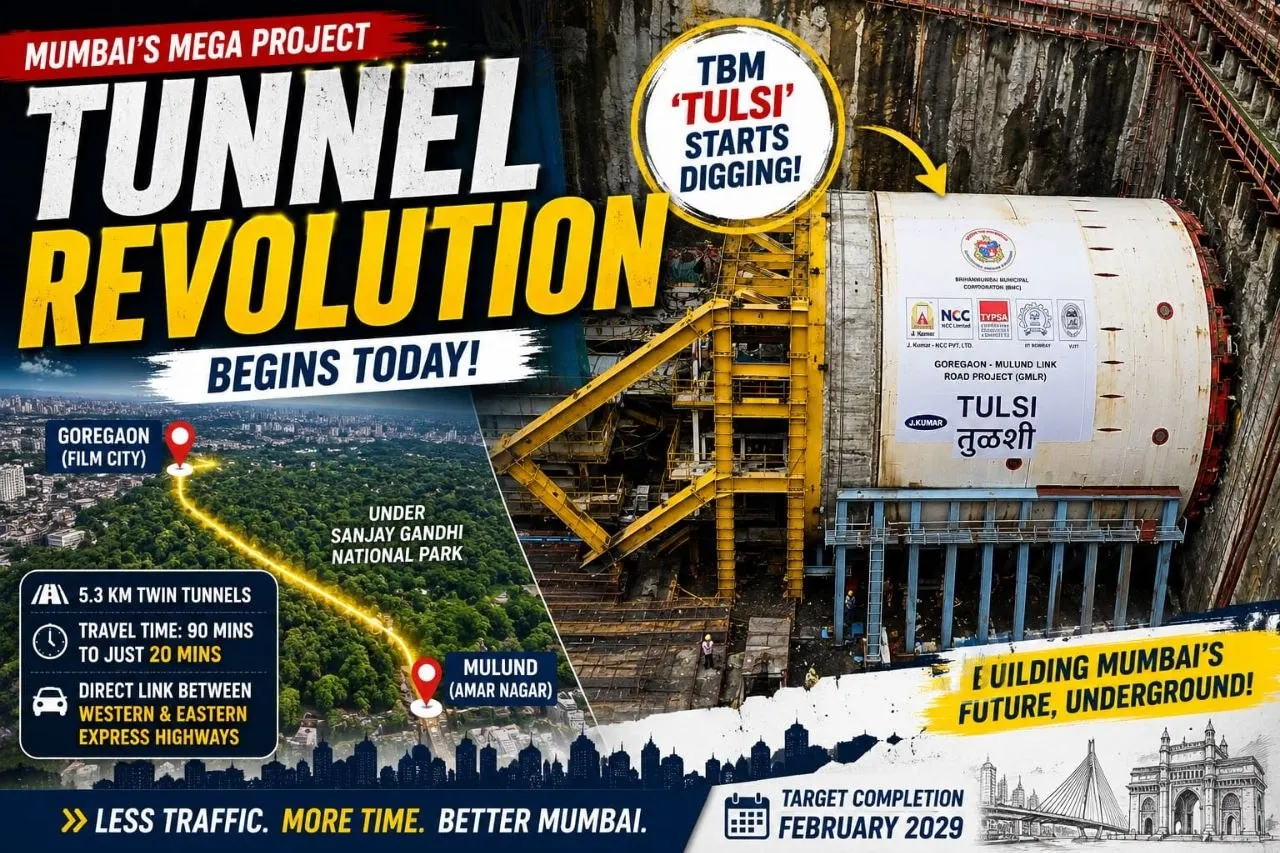
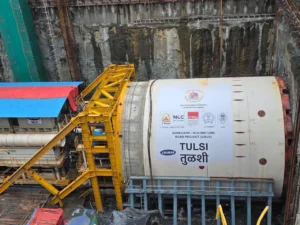
Goregaon Mulund Link Road Tunnel: A major milestone has been achieved in Mumbai’s ambitious Goregaon–Mulund Link Road (GMLR) Project, with tunnelling work officially beginning on Monday, August 17, 2026. The Brihanmumbai Municipal Corporation (BMC) has commenced excavation of the first of two massive underground tunnels connecting Dadasaheb Phalke Chitranagari (Film City) in Goregaon East with Amar Nagar in Mulund West, passing beneath the Sanjay Gandhi National Park. The project is using advanced Earth Pressure Balance (EPB) Tunnel Boring Machine (TBM) technology to construct two parallel tunnels, each designed with three traffic lanes. The giant TBM being used for the excavation has been named “Tulsi.”
Goregaon Mulund Link Road Tunnel – 5.3-Km Twin Tunnel Under Mumbai’s Green Belt.
Under Phase 3(B) of the GMLR project, two tunnels with a combined underground corridor length of approximately 5.30 km are being constructed beneath the Sanjay Gandhi National Park. The project has been planned with special attention to environmental protection and biodiversity, with the tunnel construction designed to minimise any adverse impact on the forest ecosystem above. The wider Phase 3(B) package includes 17 cross passages, 720 metres of twin box tunnels and 600 metres of approach roads at Goregaon and Mulund, taking the total length of the package to approximately 6.62 km.
Goregaon Mulund Link Road Tunnel – From 90 Minutes to Just 20 Minutes?
Once the Goregaon–Mulund Link Road is completed, it is expected to establish a direct connection between Mumbai’s Western Express Highway and Eastern Express Highway. According to the BMC, the project could significantly reduce travel time between Mumbai’s eastern and western suburbs — potentially bringing a journey that currently takes around 90 minutes down to nearly 20 minutes, depending on traffic conditions. The project is also expected to reduce congestion, save fuel and travel time, improve emergency response connectivity and strengthen commercial and industrial movement across the city.
The tunnels will feature several modern systems, including mechanical ventilation, a mist-based firefighting system, CCTV surveillance, a SCADA control system, LED lighting, modern road signage, utility ducts beneath the roadway, and 1,800-mm-diameter water pipelines in each tunnel. The project will also include cross passages constructed using the New Austrian Tunnelling Method (NATM).