


Alam B Pathan | Mumbai
Wire Centre
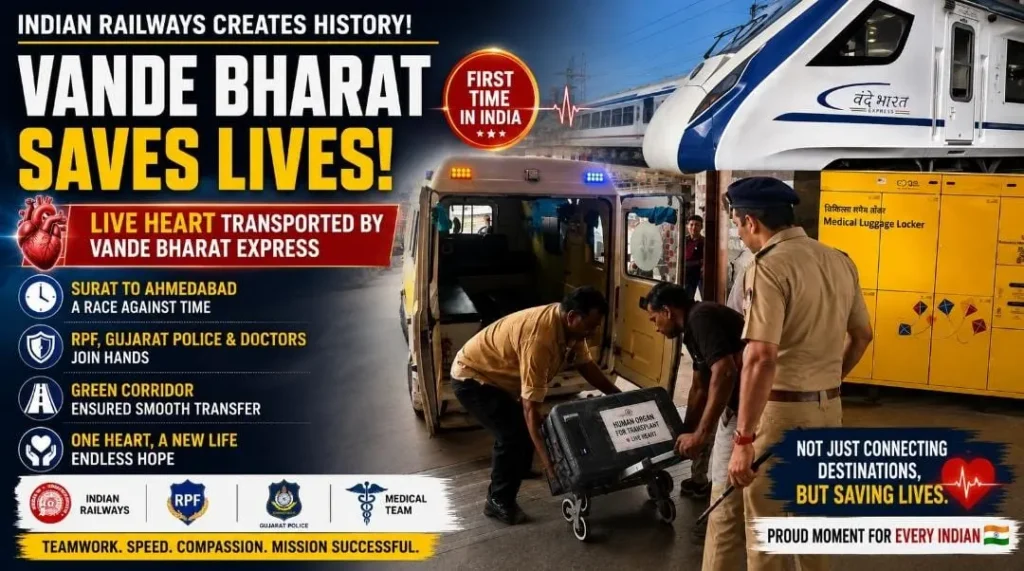
The donor heart was transported in a specialized preservation container and, upon arrival at Ahmedabad Railway Station, was immediately moved through a Green Corridor created by RPF and Gujarat Police to U.N. Mehta Institute of Cardiology & Research Centre, where the recipient was prepared for transplant. Medical experts emphasize that donor hearts remain viable for only a limited period after retrieval, making rapid, coordinated transportation critical to a transplant’s success.
Live Heart Transport India – Green Corridor Ensures Swift Delivery
The donor heart was transported in a specialized preservation container and, upon arrival at Ahmedabad Railway Station, was immediately moved through a Green Corridor created by RPF and Gujarat Police to U.N. Mehta Institute of Cardiology & Research Centre, where the recipient was prepared for transplant. Medical experts emphasize that donor hearts remain viable for only a limited period after retrieval, making rapid, well-coordinated transportation one of the most critical factors in the success of any heart transplant.
Live Heart Transport India – A Model of Inter-Agency Collaboration.
Officials described the operation as a shining example of inter-agency collaboration, highlighting the growing role of India’s transport infrastructure in supporting emergency healthcare services. The successful transfer reflects the country’s improving organ transport network and demonstrates how integrated planning can directly contribute to saving human lives. While the train’s punctuality and operational efficiency supported the mission, the real success lay in the flawless coordination between healthcare professionals, security agencies, and transport authorities, ensuring the donor heart reached its destination within the crucial transplant window.
Live Heart Transport India – A Boost for India’s Organ Donation Ecosystem.
The historic operation is expected to strengthen confidence in India’s organ donation and transplant ecosystem and encourage greater collaboration for future life-saving medical missions. Health officials note that successful, high-visibility transfers like this one play an important role in building public awareness and trust around organ donation, particularly in a country where donation rates have historically lagged behind global averages. Each such mission also offers a working template that other states can draw on when coordinating similar time-critical transfers in the future.