


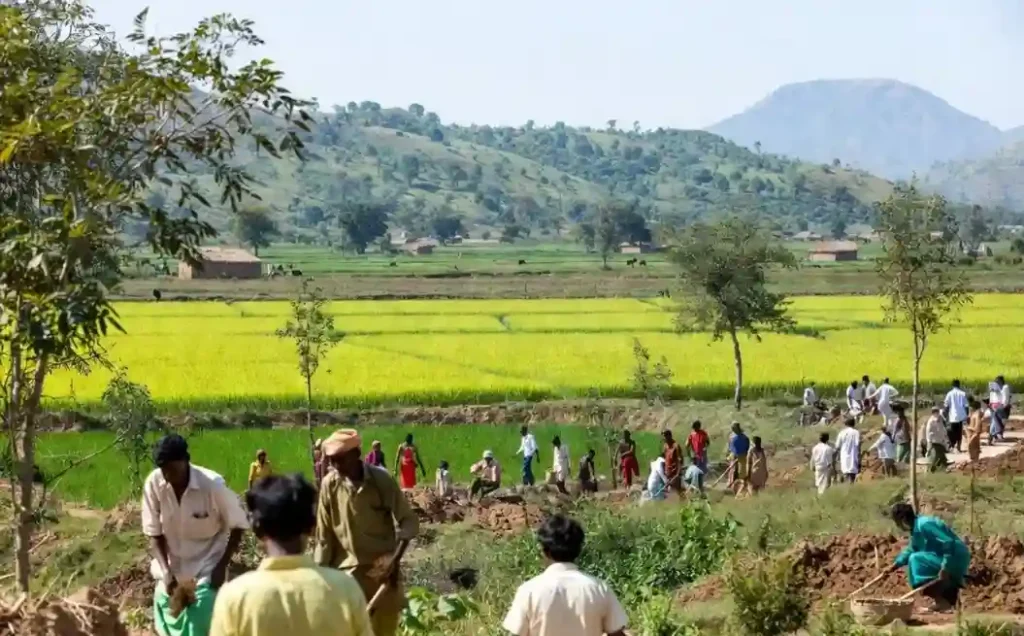
In a monumental shift for India’s rural economy, the Union Government has officially rolled out the Viksit Bharat – Guarantee for Rozgar and Ajeevika Mission (Gramin) Act, popularly known as the VB-G RAM G scheme, across the entire country. Marking a significant upgrading of the nation’s social safety net, this landmark initiative formally replaces the decades-old Mahatma Gandhi National Rural Employment Guarantee Act (MGNREGA). The comprehensive rollout introduces a substantial expansion in statutory worker rights and marks a major milestone toward achieving the broader economic vision of a developed India.
Statutory Employment Guarantee Upgraded to 125 Days
The most defining feature of the newly implemented VB-G RAM G framework is the legal expansion of guaranteed employment. Eligible rural households now hold a statutory right to demand up to 125 days of guaranteed wage employment per financial year, a notable increase from the 100-day limit previously permitted under MGNREGA. This upgrade is specifically designed to provide robust livelihood cushions, bolster financial security for rural families during lean agricultural seasons, and ensure that unskilled manual laborers are protected against volatile market fluctuations.
Massive Financial Outlay Fueled by Centre-State Partnerships
To ensure the seamless nationwide execution of this mega welfare initiative, a massive financial architecture has been put in place. The Central Government has provisioned a direct budgetary allocation of over ₹95,600 crore. Furthermore, when combining the mandatory fiscal contributions and participation of individual State Governments, the total consolidated pool of operational funds allocated for the scheme jumps to an unprecedented figure exceeding ₹1,51,282 crore. These funds will directly support direct benefit wage transfers and material costs required for sustainable development.
Empowering Gram Panchayats for Localized, Sustainable Infrastructure
Unlike top-down administrative models, the operational foundation of the VB-G RAM G scheme rests entirely on decentralized, participatory planning led by local Gram Panchayats. Village councils are empowered to design localized development blueprints tailored specifically to their immediate community needs, focusing heavily on water security, core rural infrastructure, and climate change mitigation. This strategy serves a dual purpose: it guarantees immediate economic livelihood to worker communities while simultaneously constructing durable, high-value assets that lay the groundwork for self-reliant and prosperous rural ecosystems.