

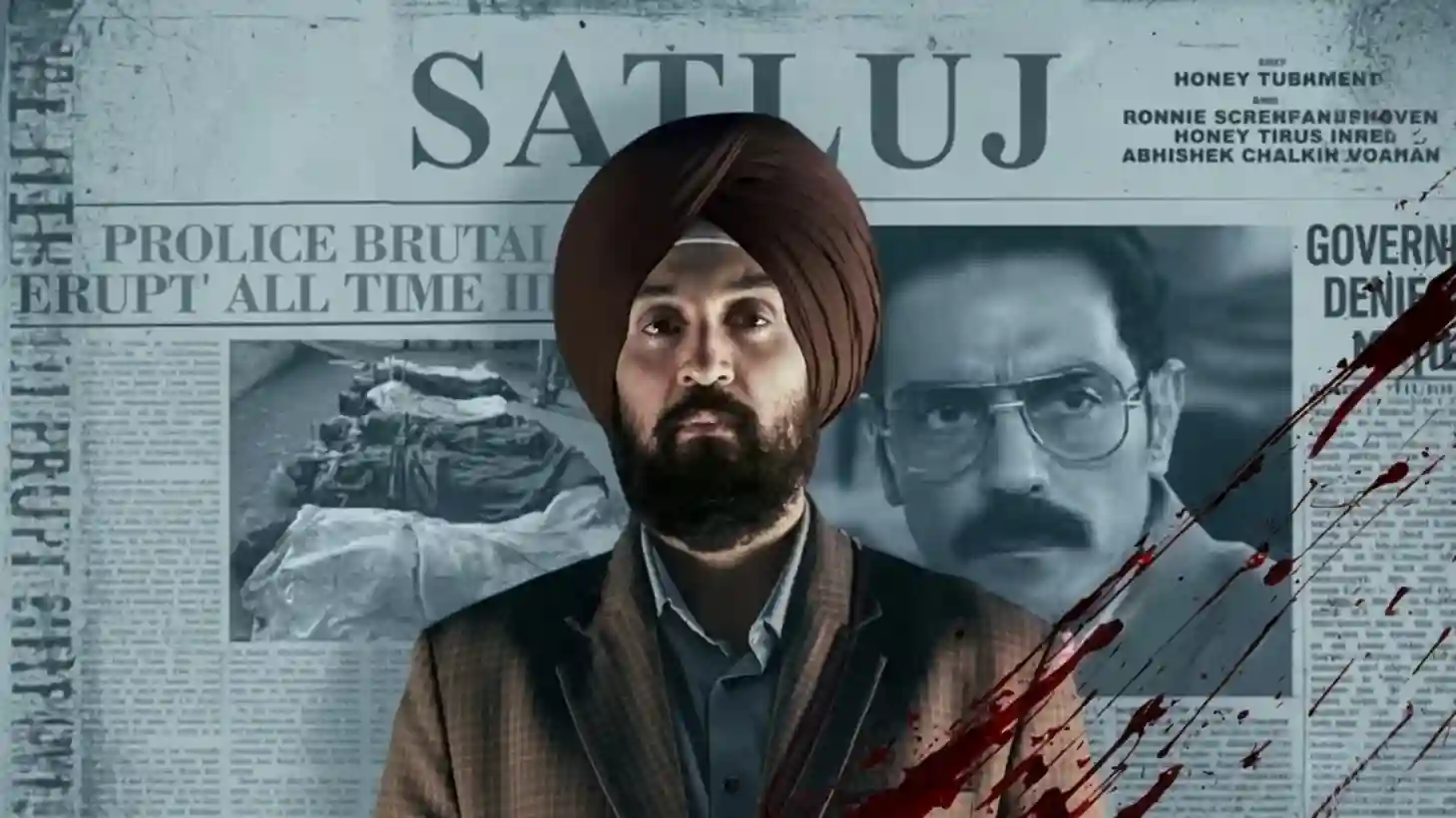
Diljit Dosanjh Satluj The Ministry of Information and Broadcasting has instructed the digital streaming service ZEE5 to immediately suspend the domestic broadcast of the Diljit Dosanjhled cinematic feature, Satluj. The sweeping executive directive materialized less than 48 hours after the highly controversial film made a quiet, unannounced digital debut on the platform. The project, which chronicles the turbulent life and mysterious death of human rights champion Jaswant Singh Khalra, bypassed traditional theatrical networks entirely to escape massive structural cuts mandated by censor authorities. While ZEE5 validated its unwavering solidarity with the creators’ distinct cinematic expression, government personnel defended the domestic restriction by explicitly citing severe internal security threats and mandatory compliance under India’s IT Act.
Diljit Dosanjh Satluj – The Complex Dynamic Between Theatrical Censorship and Digital Channels
The sudden executive intervention brings renewed attention to the divergent regulatory frameworks managing cinema exhibition across India. Under the long-standing Cinematograph Act, the Central Board of Film Certification (CBFC) holds strict statutory jurisdiction over physical cinema screenings, previously demanding an unprecedented 127 structural deletions and a mandatory title revision before granting a clearance certificate to the project. Seeking to bypass these extensive administrative blockades, the production companies chose to withdraw their legal petition from the Bombay High Court and leverage the regulatory flexibility of over-the-top (OTT) platforms. Because digital platforms operate outside the structural boundaries of the CBFC, the uncensored feature was successfully hosted under the title Satluj—only to be swiftly met with an executive blocking order executed through the Inter-Departmental Committee framework.
Diljit Dosanjh Satluj – Public Retaliation, Star Responses, and Legal Backlash Across States
The government-ordered removal has ignited intense public resistance from human rights organizations, civil liberties bodies, and high-profile creative personalities. Lead actor Diljit Dosanjh publicly challenged the administrative ban via his social media handles, delivering an explicit statement honoring the memory of the central figure while drawing parallels between the historical suppression of the activist and the modern censorship of the film itself. The corporate entity behind ZEE5 confirmed it is actively mobilizing alternative legal remedies to restore the film for its domestic subscribers, even as the international version continues to stream globally without restriction. The operational shutdown has quickly escalated into a constitutional dispute, culminating in a Public Interest Litigation (PIL) launched within the Punjab and Haryana High Court that characterizes the sudden domestic blackout as a direct infringement of fundamental free speech guarantees.
Diljit Dosanjh Satluj – Government Arguments and Emerging Policies for Global Streaming Formats
Defending the drastic enforcement mechanism, senior administrative officials stated that digital entertainment services remain entirely bound to statutory directives issued under Rule 14 of the Information Technology Rules, 2021. Government circles revealed that the decision to block the film was heavily influenced by sensitive intelligence reports warning that the uncensored narrative could potentially be manipulated by adverse international factions to disturb regional public order. Authorities noted that the filmmakers intentionally evaded standard institutional arbitration by releasing the contested content under an alternative name without implementing the mandated revisions. The high-profile confrontation has prompted central policymakers to reconsider their legislative approach to digital media, with active institutional discussions underway regarding the potential implementation of mandatory CBFC pre-certification protocols for all direct-to-OTT feature films.
