

Yusuf Rana | Mumbai
Wire Centre
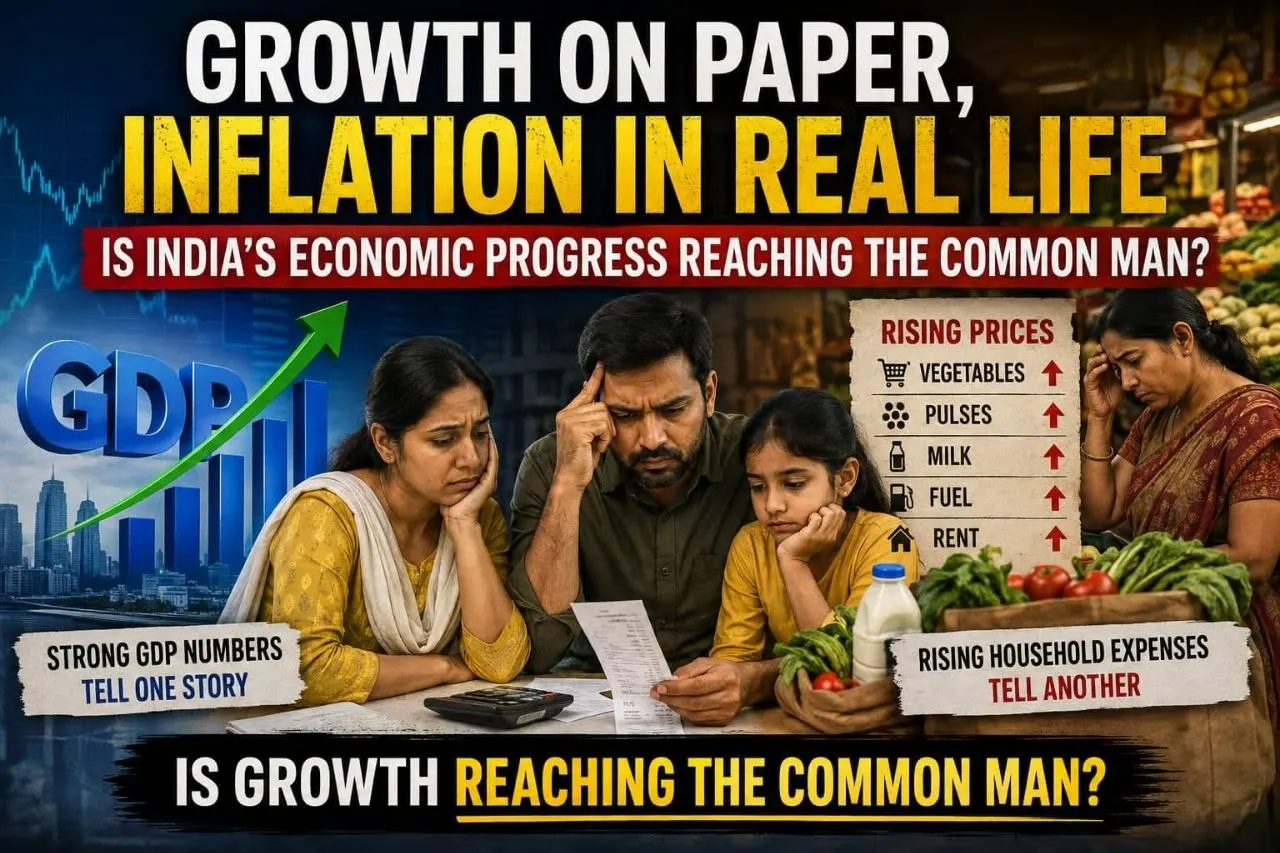
India’s strong GDP growth, rising investments and expanding global economic position have created optimism about the country’s future. But behind these impressive numbers lies a critical question:
Is economic growth actually improving the financial lives of ordinary Indians?
For millions of families, economic progress is not measured by GDP figures or stock-market indices. It is measured by the monthly household budget.
Can a family afford groceries, school fees, rent, healthcare and transportation—and still save for the future?
This question has gained renewed importance amid concerns over inflation and the rising cost of living. NCP (Sharad Pawar faction) MP Supriya Sule has also highlighted the apparent gap between strong economic growth claims and the financial pressures faced by ordinary citizens.
Inflation Is Felt in Every Household
Rice, wheat, pulses, cooking oil, milk, vegetables and other essentials form the foundation of everyday life. Even moderate price increases across several items can put significant pressure on monthly budgets.
The middle class is particularly vulnerable. Many families receive limited government assistance, while their incomes may not be enough to absorb every increase in expenses.
For low-income families and daily-wage workers, the challenge is even greater because incomes can be uncertain while essential expenses remain unavoidable.
Inflation is not simply a percentage in an economic report. It is felt when the same amount of money buys fewer groceries than before.
Growth Must Create Jobs and Better Incomes
GDP growth is important because it can attract investment, expand businesses and create opportunities. But growth must ultimately translate into jobs, better wages and greater economic security.
For India’s young population, the most important economic question is often not how fast GDP is growing, but whether they can find a stable job that provides a reasonable income.
If economic expansion does not generate enough quality employment, its benefits may remain unevenly distributed.
Farmers Cannot Be Left Behind
Farmers remain another important part of the economic debate. Rising input costs, market uncertainty, weather conditions, debt and fluctuating returns continue to create financial challenges.
A truly strong economy must ensure that those who produce the country’s food can also enjoy a dignified and financially secure livelihood.
Maharashtra’s Reality
Maharashtra reflects the contrast between economic activity and the cost of living.
Mumbai is one of India’s biggest financial centres, but housing, education, healthcare, transport and food consume a large share of household income.
Even during festivals such as Ganeshotsav, Dussehra and Diwali, when markets traditionally see increased activity, families with limited disposable income may find it difficult to spend freely.
The Real Test of Development
The debate over inflation should go beyond political arguments about government policies or global economic conditions.
The ordinary citizen still has to pay the grocery bill, rent, school fees and medical expenses.
India’s ambition to become a major global economic power is important. But the success of that ambition should not be measured only by GDP size.
It should also be measured by jobs, household incomes, affordable food, quality education, accessible healthcare and the ability of families to save for tomorrow.
The real question is simple:
Can an ordinary Indian feel economically secure?
If the answer remains uncertain for a large section of society, strong GDP numbers alone cannot tell the complete story of development.
Growth should not remain confined to statistics. It should be visible in the everyday lives of ordinary Indians.
