

Yusuf Rana | Mumbai
Wire Centre
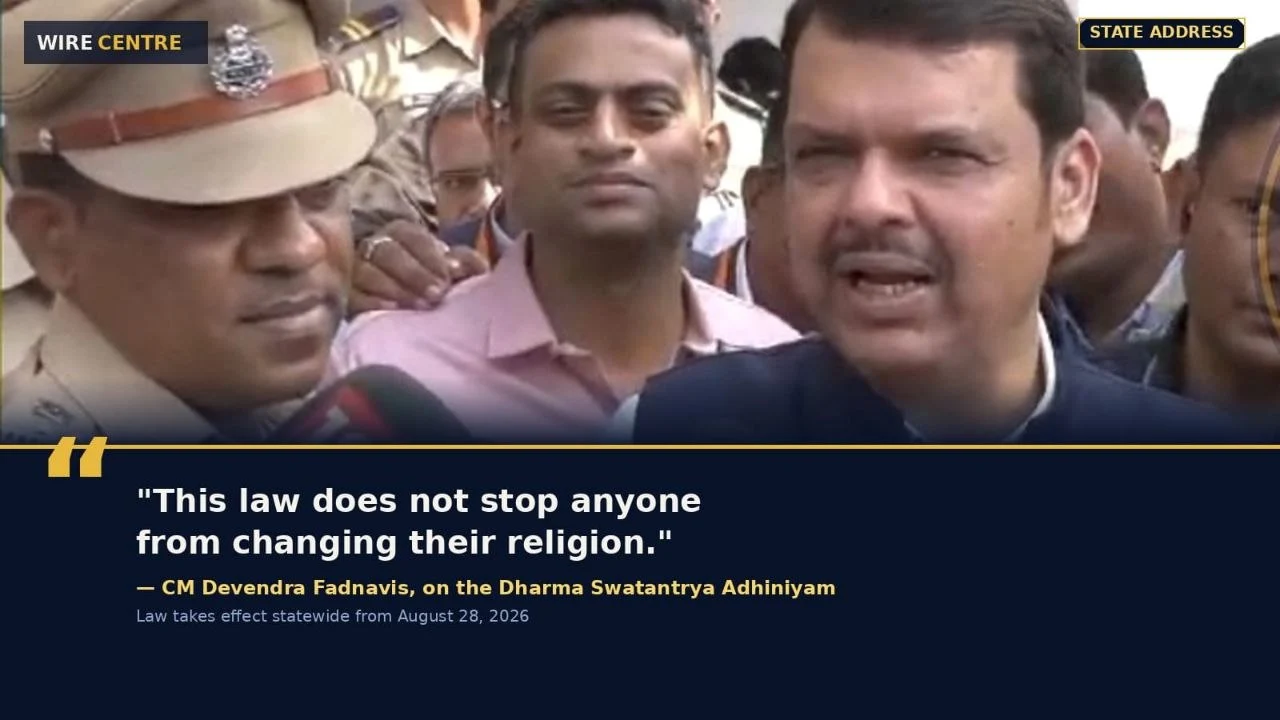
Maharashtra Anti-Conversion Law: Maharashtra is set to become the 13th state in India to enforce a strict anti-conversion law, as the Dharma Swatantrya Adhiniyam, 2026 — the Maharashtra Freedom of Religion Act — takes effect statewide on August 28, following a formal gazette notification issued by the state government. The legislation was passed by the Maharashtra Assembly by voice vote in March 2026, introduced as Assembly Bill No. 20 by Minister of State for Home Pankaj Bhoyar. Chief Minister Devendra Fadnavis has been unambiguous about the law’s intent, clarifying that it does not restrict a person’s right to change their religion — it targets conversions carried out through force, fraud, coercion, allurement, or under the guise of marriage.

Maharashtra Anti-Conversion Law – What Counts as an Offence
The law sets out a tiered penalty structure depending on the nature of the violation. Unlawful conversion through the guise of marriage carries up to 7 years imprisonment and a fine of ₹1 lakh. Cases involving minors, mentally unsound individuals, women, or persons from Scheduled Castes/Scheduled Tribes carry a stiffer penalty — 7 years imprisonment and a fine of ₹5 lakh. Mass conversions attract the same punishment: 7 years and ₹5 lakh. Repeat offenders face up to 10 years imprisonment, with fines up to ₹5 lakh, making this among the more stringent versions of anti-conversion legislation currently in force across Indian states.
Maharashtra Anti-Conversion Law – Section 5: What Happens to Children of Voided Marriages
One of the more consequential — and more debated — parts of the Act is Section 5, which addresses marriages that courts declare null and void because they resulted from unlawful conversion. Under this provision, a child born of such a marriage is deemed to retain the religion the mother held before the marriage. The child retains inheritance and maintenance rights from both parents, and custody defaults to the mother unless a court orders otherwise. Legal experts note that this provision is likely to be one of the more closely scrutinised aspects of the law once real cases begin testing its application.
Maharashtra Anti-Conversion Law – Political Reactions Have Been Mixed
The bill found support even from opposition benches — Shiv Sena (Uddhav Balasaheb Thackeray) chief Uddhav Thackeray backed the legislation, stating that while the right to choose one’s religion is constitutional, his party stands firmly against conversions carried out through force or deception. Christian organisations, opposition parties, and civil society groups, however, have raised concerns that the law’s broader language — particularly around terms like “allurement” and “undue influence” — leaves room for misuse, especially against interfaith couples and religious minorities who have converted voluntarily. This tension between the law’s stated intent and concerns over its practical application is expected to remain a live point of debate as enforcement begins.
Maharashtra Anti-Conversion Law – The Bigger Picture
Maharashtra now joins a growing list of Indian states with similar anti-conversion legislation on the books. Cases challenging comparable laws in 11 other states currently remain pending before the Supreme Court — a pattern legal observers say could eventually extend to Maharashtra’s law as well, though no stay order has been reported so far. How enforcement plays out in practice, and whether it draws similar legal challenges, will likely shape how the law is viewed in the months ahead. Wire Centre will continue to track developments as the law takes effect and its early implementation unfolds.
