

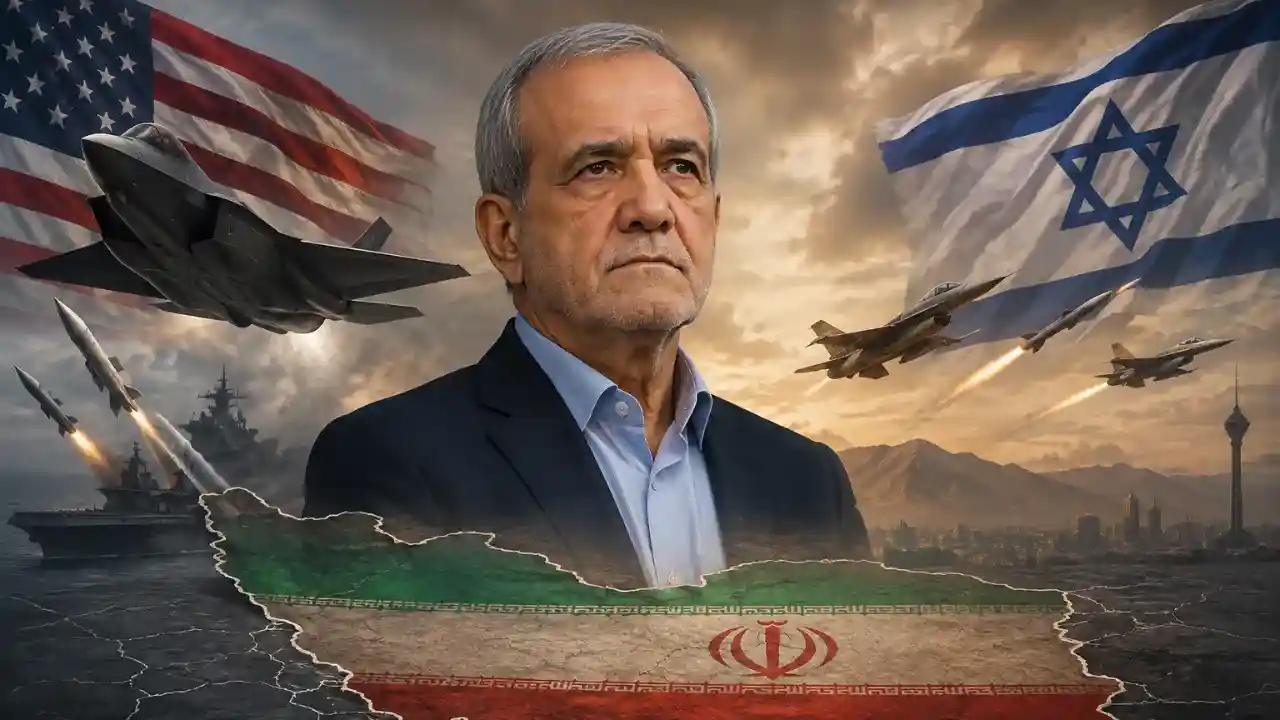
Masoud Pezeshkian Iran 48 Hour Takeover – Iranian President Masoud Pezeshkian declared during a national address that the United States and Israel had devised a military strategy aimed at seizing control of Iran within 48 hours. Speaking on the anniversary of his inauguration, Pezeshkian asserted that despite intense external pressure, military confrontations, and economic sanctions, Iran has successfully thwarted regime change efforts and emerged as a strong and respected power in the region.
Masoud Pezeshkian Iran 48 Hour Takeover – Alleged 48-Hour Plan and Comparisons to Syria
In his address broadcast by state news agency ISNA, Pezeshkian claimed that foreign adversaries attempted to execute a rapid destabilization campaign in Iran similar to operations carried out in Syria. He argued that foreign intelligence networks sought to exploit internal economic grievances and fuel civil unrest to dismantle state institutions, but insisted that public resilience and military preparedness foiled the 48-hour takeover objective.
Masoud Pezeshkian Iran 48 Hour Takeover – Status of Supreme Leader Mojtaba Khamenei and Governance Challenges
Pezeshkian also addressed internal governance dynamics following the ascension of Ayatollah Seyyed Mojtaba Khamenei as Supreme Leader. Describing Mojtaba Khamenei as an “exceptional figure,” the Iranian President dismissed reports suggesting rift or mistreatment between the Supreme Leader and the elected government. However, Pezeshkian acknowledged operational hurdles, revealing that direct communication with the Supreme Leader has become “very difficult” amid ongoing security protocols and regional tensions.
Masoud Pezeshkian Iran 48 Hour Takeover – Ongoing Talks Over Strait of Hormuz and US Relations
Paragraph 3 – The Iranian President’s comments come amid delicate diplomatic negotiations surrounding the Strait of Hormuz and maritime transit in the Persian Gulf. Following earlier military strikes and temporary ceasefire understandings with the Donald Trump administration, Tehran maintains that reopening key maritime corridors hinges on the lifting of economic sanctions and US adherence to bilateral commitments, even as regional security talks continue via regional intermediaries.
