

Alam B Pathan | Mumbai
Wire Centre
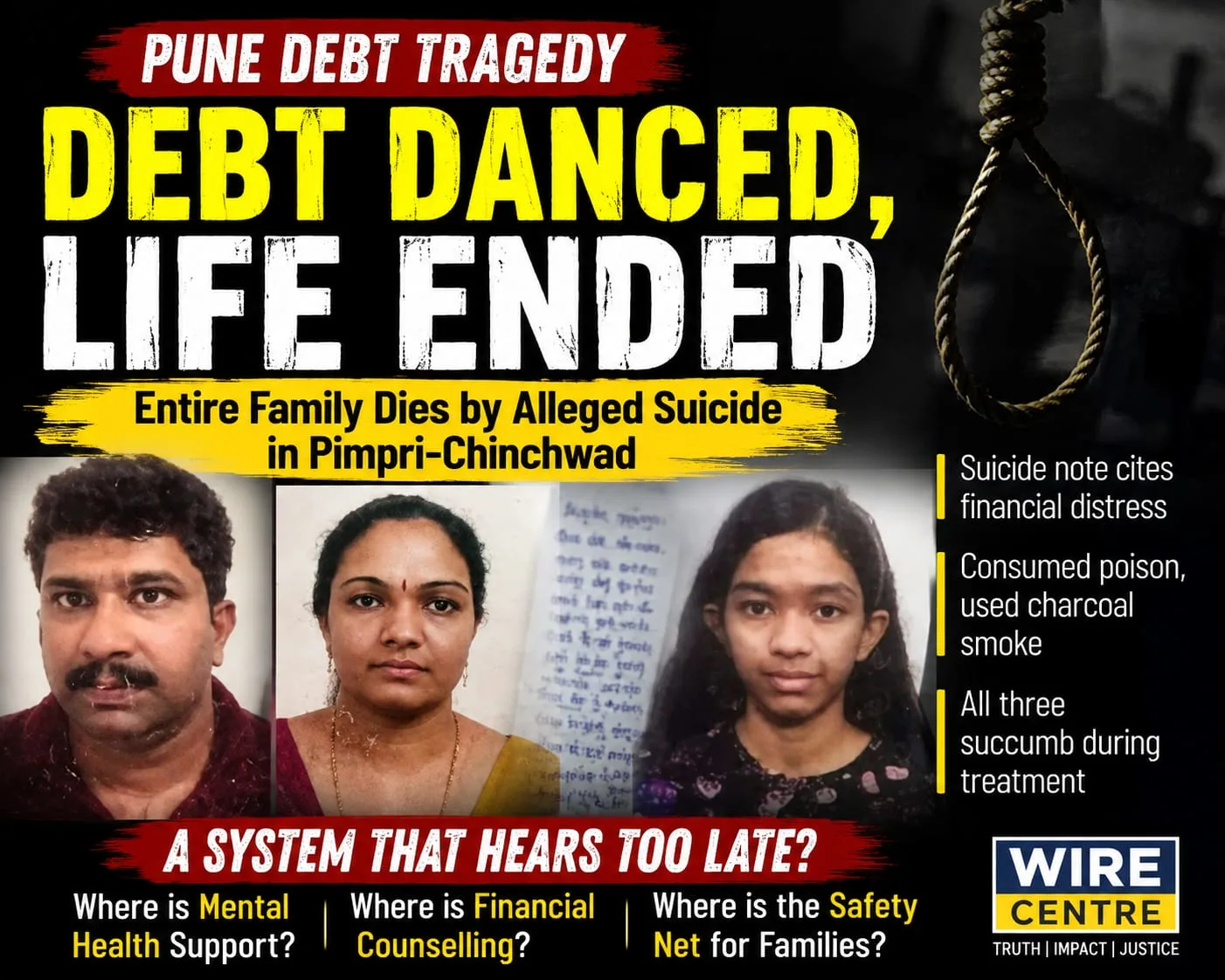
A heartbreaking tragedy from Maharashtra’s Pimpri-Chinchwad has left the nation asking whether financial hardship is becoming a silent public emergency. A family of three lost their lives after an alleged suicide attempt, with investigators saying a note recovered from the residence mentions crushing debt and severe financial distress. The incident occurred at Karishma Glory Society in Morwadi, where the Kerala-origin family — 50-year-old Vinod Pillai, his wife Sheelaja Pillai (45), and their 19-year-old daughter Poornima — was living in a rented apartment. The deaths have reignited a painful national conversation about debt, mental health, and whether India’s social safety net is reaching families before they reach a breaking point.

Pune Family Suicide Debt Crisis – Timeline of the Tragedy.
All three family members were rushed to YCM Hospital after being found unconscious, having allegedly consumed a poisonous substance and used charcoal smoke in an attempt to end their lives. Vinod Pillai was declared dead on arrival, while his wife and daughter were admitted for treatment. On Sunday morning, both Sheelaja and Poornima also succumbed, taking the death toll to three. Police said a handwritten note was recovered from the apartment, with preliminary information suggesting the family referred to overwhelming debt and financial pressure as the reason behind the extreme step. Investigators are currently verifying the contents of the note, and the case remains under investigation.
Pune Family Suicide Debt Crisis – A Human Rights Question Beyond One Family.
The deaths have once again brought attention to a painful reality faced by thousands of families struggling with debt, unemployment, rising living costs and limited access to mental health support. While the investigation is ongoing, the tragedy raises larger questions about whether vulnerable families receive timely financial counselling, psychological assistance and social protection before reaching a breaking point. Access to life, dignity and mental healthcare are widely recognised as fundamental human rights, and when financial distress becomes so severe that an entire family allegedly sees no way out, it raises concerns about whether existing support systems are reaching those most in need.
Pune Family Suicide Debt Crisis – Policy Questions That Demand Answers.
The incident has renewed public discussion over several policy issues: whether existing debt-relief and financial counselling mechanisms are truly accessible to ordinary families, whether mental health support is reaching people facing severe economic distress, whether governments should strengthen early-warning systems to identify families at high financial risk, and whether welfare schemes are effectively reaching households trapped by mounting debt. These questions are likely to become part of a broader public debate as authorities continue their investigation, with police having informed the family’s relatives and continuing to examine all aspects of the case before reaching a final conclusion.
