

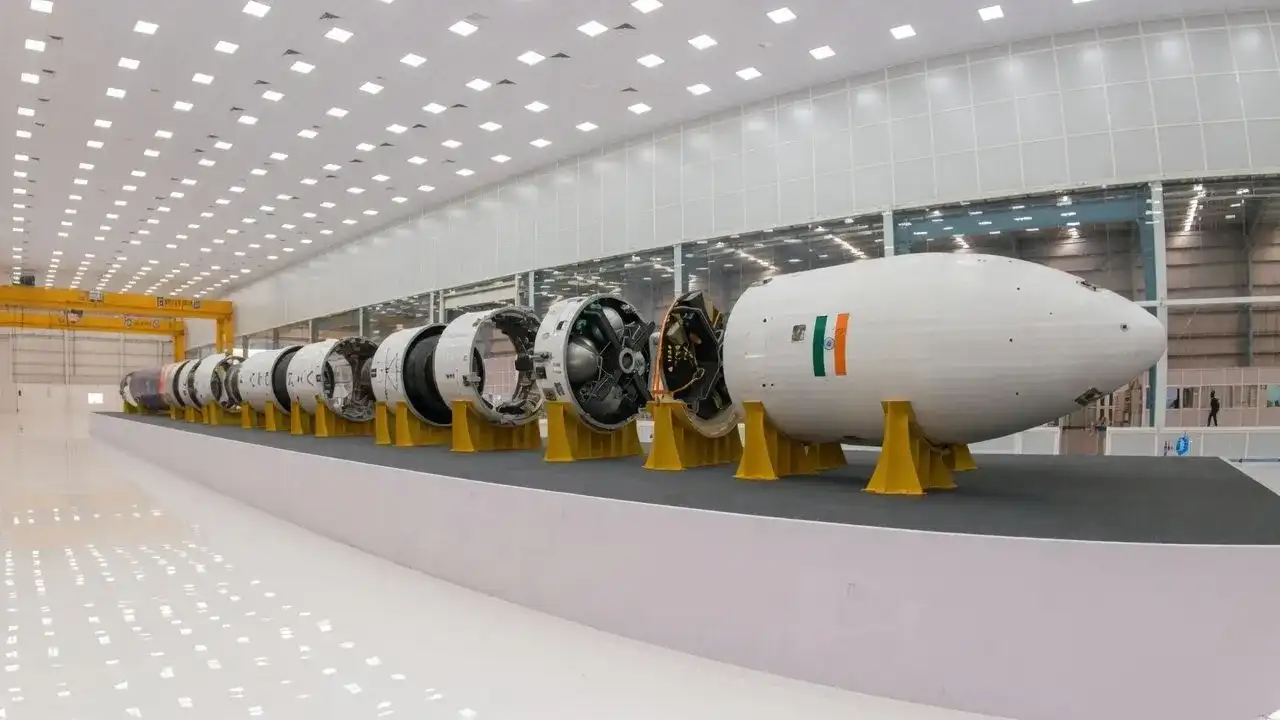
Skyroot Vikram1 orbital launch India marked a monumental paradigm shift in its commercial space ecosystem on Saturday after Hyderabadbased aerospace startup Skyroot Aerospace successfully executed the maiden orbital flight of its indigenous rocket, Vikram1. Flying under the moniker “Mission Aagaman” (Arrival), the sevenstorytall launch vehicle lifted off from the First Launch Pad at the Satish Dhawan Space Centre in Sriharikota. The vehicle successfully completed its final burn to inject six distinct technology and symbolic payloads into a precise 450kilometer Low Earth Orbit (LEO). The milestone establishes India as only the third country globally to possess private orbital launch capabilities.
Skyroot Vikram-1 orbital launch – Advanced Carbon-Composite Engineering and 3D-Printed Propulsion Systems
Standing 22 meters tall with a diameter of 1.7 meters, Vikram-1 features a highly advanced, lightweight all-carbon composite architecture built entirely using domestic infrastructure. The launch vehicle utilizes a distinct four-stage setup, relying on high-thrust solid-fuel rocket motors for its initial three stages of ascent to breach outer space. The critical final phase is governed by a cutting-edge, restartable liquid-fueled Orbit Adjustment Module (OAM) equipped with 3D-printed engines. This proprietary liquid engine module provides the exact thrust corrections necessary to deploy multiple distinct satellites into targeted spatial coordinates with high navigational accuracy.
Skyroot Vikram-1 orbital launch – Diverse Scientific Technology Demos and Symbolic Tokens Onboard
The maiden orbital mission successfully carried six distinct payloads designed to validate upcoming commercial space hardware and downstream applications. Among the primary technical cargo were Grahaa Space’s SOLARAS S3 earth-observation nanosatellite, Cosmoserve Space’s “Embrace” robotic debris-removal arm, a specialized component tester from German firm DCubed, and Skyroot’s native SCOPE payload designed to record real-time flight telemetry. Alongside the machinery, the rocket transported symbolic cargo, including an 18-karat gold micro-rocket featuring microscopic engravings of legendary Indian scientists, a floral artwork crafted from lab-grown diamonds by Cosmos Diamonds named “Cosmic Bloom,” and an autographed “Vande Mataram” postcard penned by Prime Minister Narendra Modi.
Skyroot Vikram-1 orbital launch – Unlocking Global Commercial Viability for the Indian Private Space Sector
This operational success follows Skyroot’s groundbreaking suborbital launch of the smaller Vikram-S rocket in late 2022 and signals the practical execution of India’s revised National Space Policy. Bolstered by government initiatives like the IN-SPACe regulatory board, the country’s private spacetech startup count has expanded exponentially from a lone entity in 2014 to over 400 active enterprises by mid-2026. Capable of hoisting up to 350 kilograms into low Earth orbit, the Vikram-1 platform is positioned to directly challenge global launch operators by offering affordable, rapid, and dedicated rideshare schedules tailored specifically to the surging international small-satellite constellation market.
